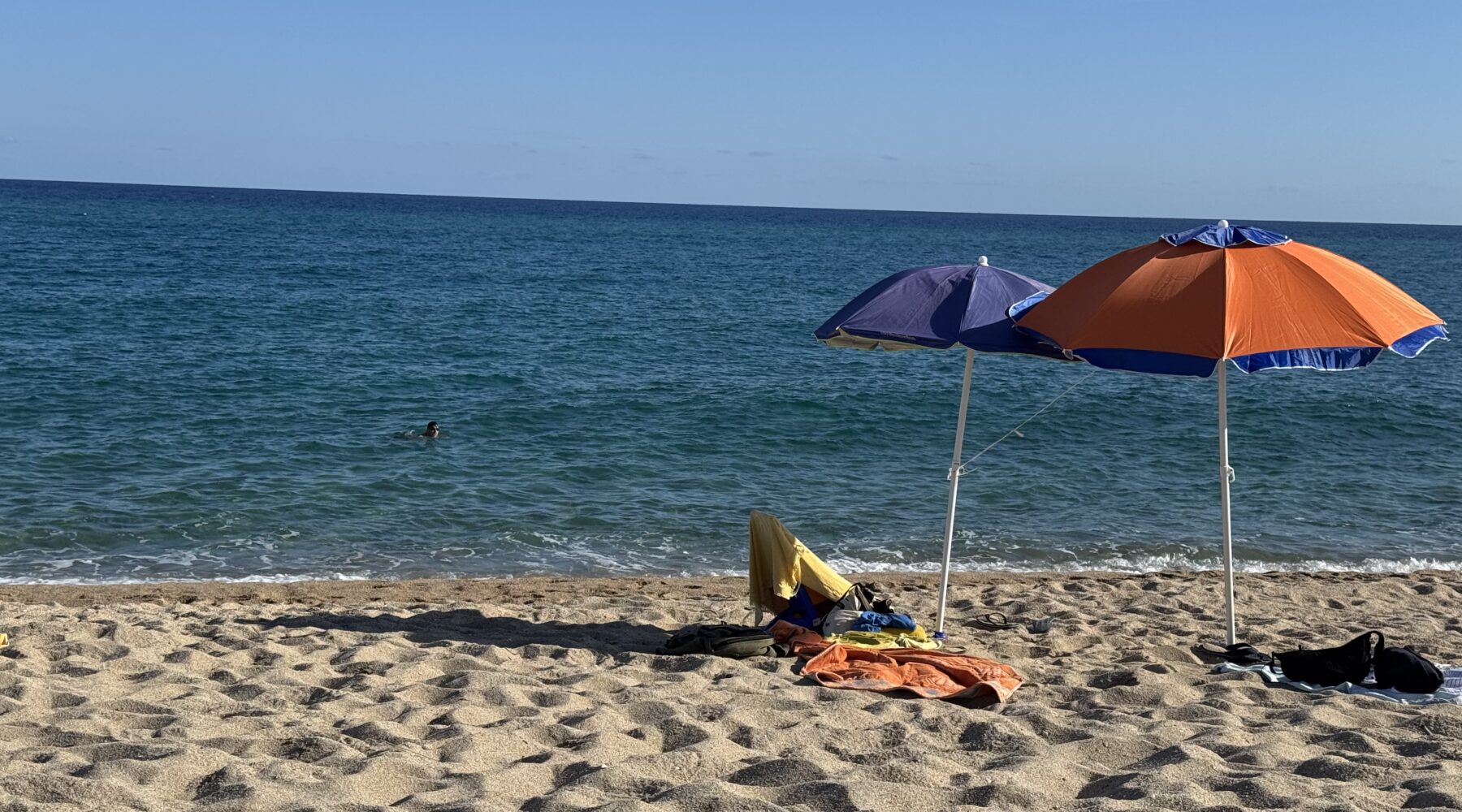
Last updated 7.10.2026
Ask anyone to picture Sardinia and you get the same postcard: turquoise water, white sand, not a cloud in the sky. In July, that is pretty much what you get. But the island is big, mountainous and wide open to the wind that blows down from France, so the Sardinia weather on one coast can be surprisingly different from the weather on the other, even on the same afternoon.
The wind is where you notice it most. When the mistral (the Italians call it maestrale) blows in from the north-west, the beaches around Alghero can be covered in whitecaps and red swimming flags, while less than three hours away by car, on the east coast, the sea is flat as a mirror. Once you know this, you can almost always find somewhere to swim in Sardinia. Below you will find the numbers month by month, coast by coast, and what they mean for your trip.
Sardinia weather at a glance
- July and August are the hottest months. Cagliari averages around 32 °C in the afternoon, Alghero roughly two degrees less.
- The sea is warmest in August: about 27 °C in the south and east, two degrees less around Alghero in the west. In the first half of September it is still above 26 °C.
- The swimming season runs from the second half of June to mid-October. In May the sea is more for a quick dip.
- It hardly rains in summer. November is the wettest month, with over 100 mm around Alghero in the north-west.
- Your beach day often depends less on the month than on the mistral. It blows from the north-west, most often in winter and spring. The escape route is east or south.
- Heatwaves are getting more frequent. The island’s record of 48.4 °C was set in July 2026.
- In our view, June and September are the best compromise; for hiking, go in April, May or October.
Sardinia weather by month: averages for the south of the island
These figures are for the area around Cagliari airport in the south: 2015 to 2024 averages from Open-Meteo (sea temperatures 2023 to 2025, sunshine from the weather station via Meteostat).
| Month | Day | Night | Sea | Rain | Rainy days | Sunshine |
|---|---|---|---|---|---|---|
| January | 14.7 °C | 7.3 °C | 15.3 °C | 38 mm | 6.3 | 4.6 h |
| February | 15.5 °C | 7.8 °C | 14.7 °C | 32 mm | 6.6 | 5.2 h |
| March | 17.0 °C | 9.1 °C | 15.2 °C | 48 mm | 8.0 | 6.3 h |
| April | 19.8 °C | 11.2 °C | 16.5 °C | 40 mm | 6.9 | 7.2 h |
| May | 23.6 °C | 14.7 °C | 19.2 °C | 53 mm | 6.1 | 8.4 h |
| June | 28.6 °C | 19.3 °C | 23.2 °C | 13 mm | 2.8 | 10.0 h |
| July | 32.5 °C | 22.3 °C | 26.3 °C | 1 mm | 0.3 | 10.9 h |
| August | 32.1 °C | 22.2 °C | 26.9 °C | 10 mm | 1.4 | 10.0 h |
| September | 28.5 °C | 19.8 °C | 25.5 °C | 35 mm | 5.5 | 8.0 h |
| October | 24.2 °C | 16.2 °C | 23.3 °C | 47 mm | 6.2 | 6.1 h |
| November | 19.3 °C | 12.3 °C | 20.2 °C | 67 mm | 10.2 | 4.8 h |
| December | 16.3 °C | 8.9 °C | 17.0 °C | 38 mm | 6.1 | 4.3 h |
💡 How to read the table. “Day” is the average daily maximum, so the afternoon temperature, not the 24-hour average. “Rainy days” counts days with at least one millimetre of rain. “Sunshine” is the average number of sunny hours per day. The night temperatures in the table run one to two degrees warmer than what the airport station records.
Around Cagliari, annual rainfall comes to 421 mm (the driest year of the decade had 193 mm, the wettest 728 mm). For comparison, the lowlands of Central Europe get 500 to 600 mm a year, but spread over every month. In Sardinia nearly all of it falls between October and April.
You will often read that Sardinia has “300 sunny days a year”. The Cagliari station recorded an average of 2,608 hours of sunshine a year, which is a lot by European standards, but the number of completely clear days comes out at around 150. The rest are partly cloudy.
North, south, east, west and the mountains: how much the Sardinia climate varies
Sardinia is about 270 kilometres from north to south, with the Gennargentu massif in the middle, topping out at 1,834 m on Punta La Marmora. The temperature gap between the coasts is not dramatic, a couple of degrees either way. What really changes from one coast to the next is rain, wind and how the sea behaves. Daily maximums for four places by the sea and one in the mountains:
| Month | Cagliari (south) | Alghero (north-west) | Olbia (north-east) | Cala Gonone (east) | Fonni (mountains, 965 m) |
|---|---|---|---|---|---|
| January | 14.7 °C | 13.6 °C | 13.9 °C | 13.5 °C | 7.7 °C |
| February | 15.5 °C | 14.3 °C | 15.1 °C | 14.4 °C | 9.5 °C |
| March | 17.0 °C | 15.8 °C | 16.3 °C | 15.6 °C | 11.0 °C |
| April | 19.8 °C | 18.6 °C | 19.2 °C | 18.2 °C | 14.7 °C |
| May | 23.6 °C | 21.9 °C | 23.0 °C | 21.8 °C | 18.6 °C |
| June | 28.6 °C | 27.2 °C | 28.9 °C | 26.8 °C | 24.8 °C |
| July | 32.5 °C | 30.2 °C | 32.7 °C | 30.7 °C | 29.2 °C |
| August | 32.1 °C | 30.0 °C | 32.0 °C | 30.4 °C | 28.2 °C |
| September | 28.5 °C | 26.5 °C | 27.4 °C | 26.7 °C | 22.6 °C |
| October | 24.2 °C | 22.7 °C | 23.3 °C | 22.7 °C | 18.3 °C |
| November | 19.3 °C | 18.2 °C | 18.2 °C | 17.8 °C | 12.5 °C |
| December | 16.3 °C | 15.2 °C | 15.5 °C | 15.2 °C | 9.4 °C |
| Annual rainfall | 421 mm | 616 mm | 576 mm | 581 mm | 850 mm |
South: Cagliari, Villasimius, Chia
The driest part of the island and the hottest in summer. In spring and autumn it is one or two degrees warmer here than in the north, which makes the south the safest bet for May and October. The mistral reaches the south too, but on this coast it blows from the land out to sea, so south-facing beaches often stay calm even when it is windy. On average, the temperature here climbs above 35 °C on nine days a year.
North-east: Olbia, Costa Smeralda, La Maddalena
Summer afternoons in Olbia are just as hot as in Cagliari; it is the west of the island that runs cooler, not the north. In autumn and winter, though, it rains more here than in the south. The strait between Sardinia and Corsica, the Bocche di Bonifacio, is one of the windiest spots on the island, and when the mistral is blowing, boat trips to the La Maddalena archipelago are often cancelled. We cover boat trips to the Pink Beach on Budelli in a separate article.
West and north-west: Alghero, Stintino, Costa Verde
The wettest and windiest coast, because the mistral arrives here straight off the open sea. Summer is about two degrees cooler, both on land and in the water. Kitesurfers come here for exactly that reason; families with small children should have a plan B. When the wind drops, this is in our opinion the most beautiful coast for swimming on the whole island. More about the town in our guide to Alghero.
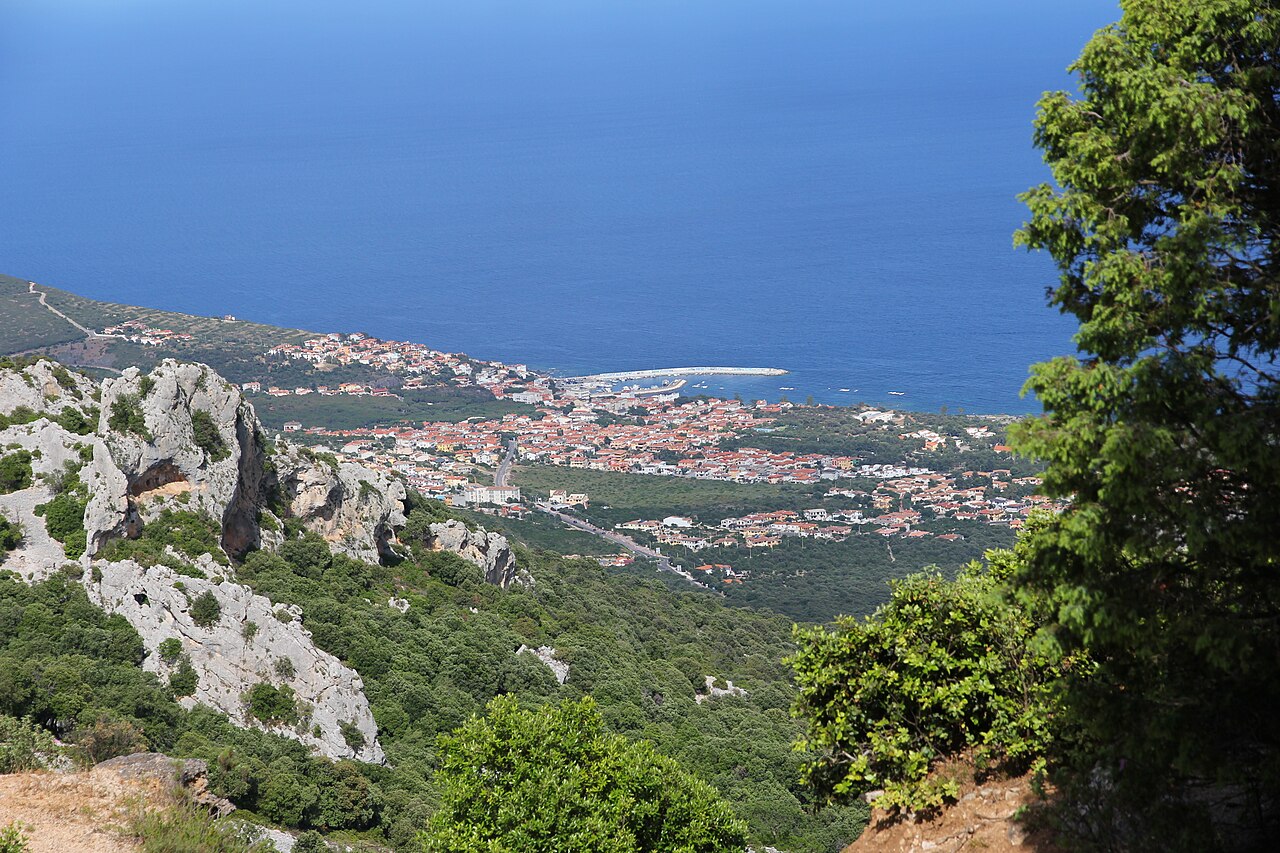
East: Cala Gonone, the Gulf of Orosei, Ogliastra
This is the calmest side of Sardinia. The Supramonte and Gennargentu mountains stand in the mistral’s way, and Cala Gonone gets roughly a third as many days of strong north-westerly wind as Alghero or Cagliari. The catch is that the east coast is exposed to winds from the east and south-east (more on that in the mistral section). It also rains more here in autumn than in the south, around 80 mm a month in October and November. We look at the gulf and its coves in our article on the Golfo di Orosei, and at the village as a base in our guide to Cala Gonone.

Cala Gonone: boat trip to Cala Mariolu and Cala Goloritzè

Cala Gonone: boat cruise in the Gulf of Orosei with swimming stops

Cala Gonone: boat trip to the Bue Marino cave and Cala Luna beach
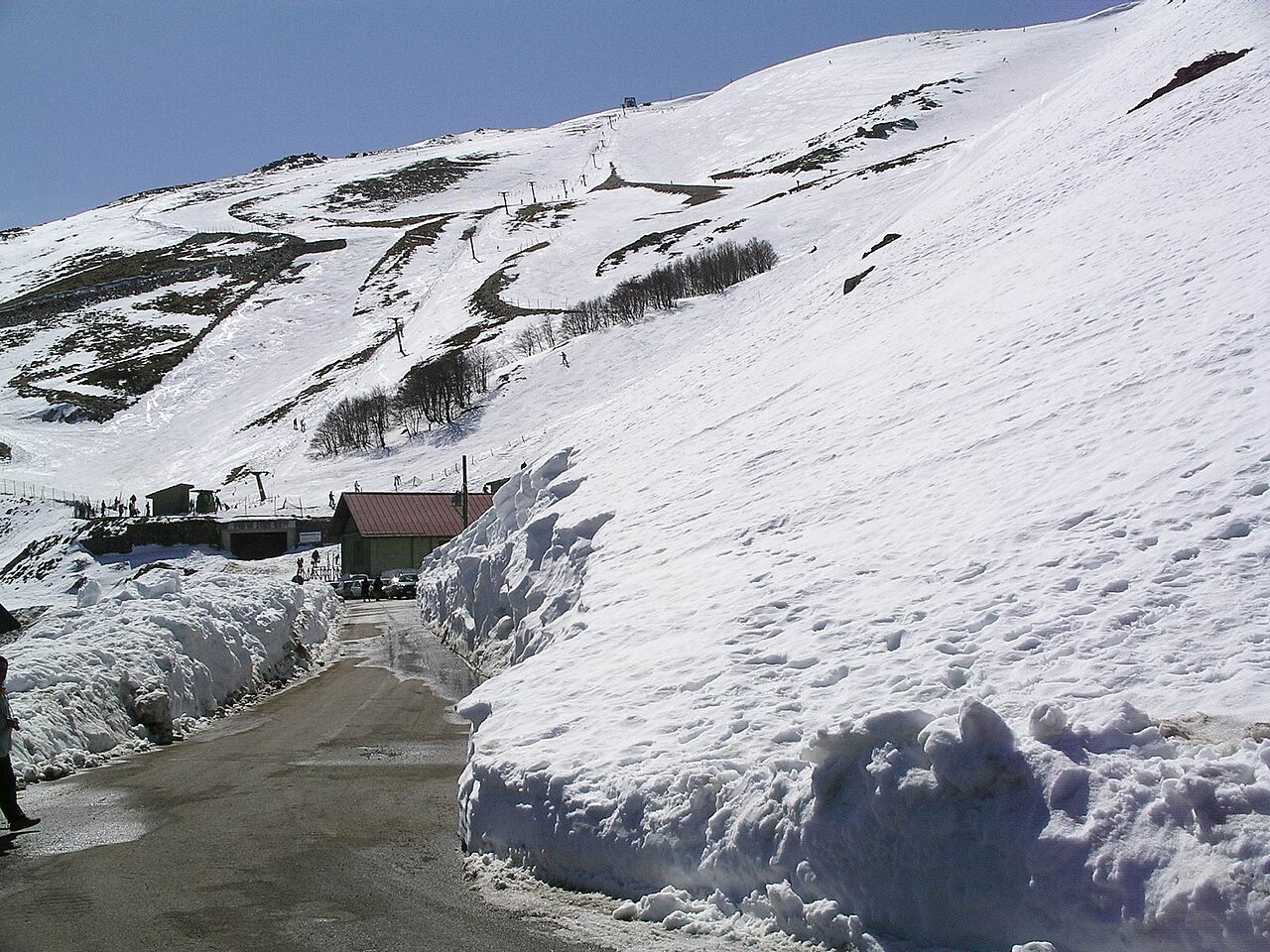
Inland and the mountains: Barbagia and Gennargentu
A different world altogether. Fonni (965 m) gets at least a centimetre of snow on about seven days a year on average, mostly in January and February, and on the slopes of Bruncu Spina below Punta La Marmora there is a small ski area, though it only runs in winters with enough snow. In summer, on the other hand, this is the most pleasant part of the island: you can sleep at night without air conditioning. The inland plains, such as the Campidano between Cagliari and Oristano, are the hottest places in summer, because the sea breeze does not reach them.
Sea temperature in Sardinia by month
The sea warms up and cools down roughly a month behind the air. Averages for four stretches of coast:
| Month | Cagliari (south) | Alghero (west) | Olbia (north-east) | Cala Gonone (east) |
|---|---|---|---|---|
| January | 15.3 °C | 15.1 °C | 14.7 °C | 15.5 °C |
| February | 14.7 °C | 14.6 °C | 14.1 °C | 14.7 °C |
| March | 15.2 °C | 14.9 °C | 14.6 °C | 14.8 °C |
| April | 16.5 °C | 16.0 °C | 15.8 °C | 15.9 °C |
| May | 19.2 °C | 18.6 °C | 18.7 °C | 18.7 °C |
| June | 23.2 °C | 22.8 °C | 22.8 °C | 22.9 °C |
| July | 26.3 °C | 24.5 °C | 26.3 °C | 26.5 °C |
| August | 26.9 °C | 25.1 °C | 27.0 °C | 27.1 °C |
| September | 25.5 °C | 23.7 °C | 24.2 °C | 25.0 °C |
| October | 23.3 °C | 22.3 °C | 22.0 °C | 23.1 °C |
| November | 20.2 °C | 19.9 °C | 19.4 °C | 20.2 °C |
| December | 17.0 °C | 16.5 °C | 16.3 °C | 17.3 °C |
2023 to 2025 were warm years, so the long-term average is likely a few tenths of a degree lower.
June has a turning point halfway through. In the first half of June the sea off Cagliari averages 22.3 °C, in the second half 24.2 °C. Those two degrees decide whether you run straight in or lower yourself in inch by inch.
For swimming, September is almost August. In the first half of September the sea is 26.1 °C off Cagliari and 25.6 °C off Cala Gonone, which is warmer than the July average. And the beaches are half empty and prices lower. Other warm-sea destinations follow the same pattern in September.
The west is cooler in summer. When the mistral blows from the north-west, it pushes the warm surface water away from the west coast and colder water wells up from below. After a few windy days the difference can be more than two degrees.
Shallow bays are warmer than rocky coves. A shallow, sandy bay is usually warmer, while rocky headlands and deeper coves, where the snorkelling is best, are cooler. On hot days we actually prefer swimming by the rocks: the water is clearer and there are more fish.
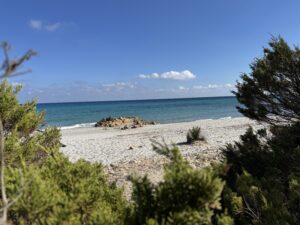
The mistral: the wind that decides your beach day
The mistral is a cold, dry north-westerly that rushes down from France across the open sea and straight onto Sardinia and Corsica. It brings clear skies, so the weather looks perfect. But on the west and north coasts it whips up waves, cools the water and can stop boat trips to La Maddalena, into the Gulf of Orosei and to the sea cave near Alghero.
It blows most often and hardest in winter and spring. Alghero has around six to seven days a month with gusts over 60 km/h in January and December, and roughly one in July and August. Strong north-westerly wind is common in Cagliari as well, but there it blows off the land.
A typical episode lasts a day or two, sometimes four or five. That gives you the one rule that really works in Sardinia: when it is blowing in the west and north, head east or south. Cala Gonone, Orosei, Ogliastra, Villasimius and the south coast around Cagliari are usually sheltered. The island is about 120 kilometres wide, so getting to the other side takes a few hours, and in our view that is the strongest argument for having a car in Sardinia.
When the wind comes from the east or south-east (levante and scirocco), the waves build up on the east coast instead, and you head west. The scirocco comes from the Sahara as hot, muggy air, sometimes carrying Saharan dust.
💡 How to keep an eye on the wind. The regional weather service ARPAS publishes wind maps for Sardinia, a sea state forecast and separate forecasts for seven areas of the island. Apps like Windfinder are handy too. We check the forecast in the evening and only then pick the next day’s beach according to the wind direction. Get your boat trip confirmed in the morning directly with the operator, because cancellations depend on the sea conditions on the spot.
Heatwaves, records and wildfires
Sardinian summers have always been hot, but in recent years they have been getting worse. In Cagliari, the average number of days a year above 35 °C went from five in 2015 to 2019 to almost fourteen in 2020 to 2024. Around Olbia it went from under six to almost sixteen.
Records keep falling too. Stations in Jerzu and Lotzorai recorded 48.2 °C on 24 July 2023, and then ARPAS confirmed 48.4 °C in Orani on 19 July 2026. Readings like these are taken inland, though; by the sea the breeze takes the edge off the heat.
The heat goes hand in hand with wildfires. Every year the region declares a high fire risk period from 1 June to 31 October, with bans and restrictions on any use of fire. We go into the details in our article on what to watch out for in Sardinia.
In practice: in July and August, set off on hikes at first light and spend the hottest part of the afternoon in the water or in the shade. If you do not cope well with heat, stick to the coast in August rather than heading inland.
Sardinia weather month by month
The figures are for Cagliari in the south unless we say otherwise. For the north and west, knock off one or two degrees and expect more rain in autumn and winter.
January and February
The coldest part of the year, but winter only by Sardinian standards: around 15 °C in the daytime and 7 to 8 °C at night. Around Alghero in the north-west it rains on about ten days a month, adding up to around 70 mm. Days are just under ten hours long and the mistral blows more often than at any other time of year. Swimming is for cold-water fans only, and there is snow in the mountains. In February, towns and villages across Sardinia celebrate carnival, with dates that move with Easter. Not a time for a beach holiday, but a good one for Cagliari, Alghero, the sights and the food without the crowds.
March
Spring is on its way, and on sunny days it gets above 20 °C. In Cagliari, though, March has the most rainy days of the whole spring and it is still often windy. The countryside is at its greenest and there is hardly anyone at the main sights. Better suited to a road trip with a flexible plan than to a week in one place.
April
Around 20 °C in the daytime, rain mostly in showers, and the sea is still too cold for swimming. In our view April is one of the best months for hiking: everything is in bloom and green, and the sun will not roast you in the canyons or on the coastal paths. Some seasonal hotels and restaurants only open during the spring, though, and boat trips run a limited schedule.

Dorgali: Gorropu canyon trek with off-road transfer and lunch

May
23.6 °C in the daytime, 14.7 °C at night. Over the month the sea warms up from 18 to 20 °C. May is the least predictable month: in 2017 Cagliari got almost no rain at all, in 2018 over 150 mm. Even so, it is a great time for hiking, cycling and exploring the island, with half-empty beaches and lower prices than in summer.
June
The jump into summer. 28.6 °C in the daytime, 13 mm of rain spread over three days, and days almost fifteen hours long, the longest of the year. Everything is open and it is not yet crowded. Together with September, June is our favourite time for Sardinia; we would just pick the second half of the month for the warmer sea.
July
The driest month of the year: 1 mm of rain in Cagliari and on average less than one rainy day. 32.5 °C in the daytime, the sea at 26 °C and almost eleven hours of sunshine a day. Heatwaves above 35 °C come in spells. Beaches, roads and boats fill up, and the best-known beaches with controlled access need to be booked in advance.
August
Practically the same temperatures as July, but the sea is the warmest of the year. Any rain usually comes from one or two thunderstorms. Around the Ferragosto holiday on 15 August the whole of Italy is off work, accommodation, hire cars and ferries sell out, and prices hit their annual peak. If you can, skip August; if you cannot, book several months ahead.
September
In our view the best month for Sardinia. 28.5 °C in the daytime, around 20 °C at night, and the sea is above 26 °C in the first half of the month. Rain usually arrives as a thunderstorm that clears quickly. The second half of September is more changeable, and by the end of the month the sun sets around seven in the evening. The Italian summer holidays are over and everything is still open.
October
24.2 °C in the daytime and the sea still at 23 °C, warmer than in the first half of June. But rainfall goes up, to 47 mm in the south, 67 mm around Alghero and 78 mm around Cala Gonone, and there are more windy days. The first half of October is still beach weather in the south, the second half is better for sightseeing. From mid-month the beach bars and some hotels close. Inland, the villages hold their autumn festivals, Autunno in Barbagia.
November
The wettest month of the year. Cagliari gets 67 mm over ten days, Alghero 104 mm. It is still mild, though, with 19 °C in the daytime and the sea at 20 °C. The rain can come down hard, as a downpour lasting several hours, so watch out for water in riverbeds and on the roads. Most seasonal businesses are closed, but it is a pleasant time for towns, food and wine without the tourists.
December
The shortest days of the year, just over nine hours of daylight. It freezes in the mountains and there may be snow on the highest peaks. The resorts are asleep, the towns carry on as normal, and Cagliari at Christmas is a completely different city from the one you see in summer.
Best time to visit Sardinia, depending on what you want to do
| What you want | Best time | Why |
|---|---|---|
| Swimming and beaches | second half of June to September | Sea above 23 °C, hardly any rain |
| Warm sea without the biggest crowds | first half of September | Sea above 25 °C, after the Italian summer holidays |
| Warmest sea | August | Around 27 °C in the south and east |
| Hiking, trekking and spring flowers | April, May, October | Daily highs of 20 to 24 °C |
| Cycling and road trips | April to June, September and October | Pleasant temperatures, quiet roads |
| Towns, sights, nuraghi | March to May, October to December | No heat and no queues |
| Kitesurfing and windsurfing | spring, autumn and mistral days | Wind in the north and west |
| Skiing at Bruncu Spina | January and February | Only when there is enough snow |
| Lowest prices | November to March | Off season, many places closed |
Sardinia weather forecast: why “Sardinia” is not specific enough
The 14-day forecasts on sites like meteoblue, yr.no or the Met Office are useful, but a forecast for “Sardinia” is really a forecast for one single point. On yr.no that point is near Olbia in the north-east. Alghero or Cagliari can have completely different weather, and above all a different wind.
So always open the forecast for the specific place where you are staying or heading. The most detailed source is the regional service ARPAS, which publishes a bulletin for the whole island. Anything more than a week ahead is just an outlook; for planning your holiday, the table of averages above is a better guide.
What to pack for Sardinia, month by month
- All year: sturdy shoes, because many of the most beautiful coves are reached by a rocky path, and water shoes for stony and pebbly entries into the sea.
- April and May: a hoodie for the evening and a light windproof jacket. After sunset the temperature drops by eight or nine degrees.
- June to August: a hat, high-factor sun cream and a windproof jacket, because in the evening the mistral can make it feel properly chilly.
- September and October: summer clothes plus a rain jacket and long trousers for the evenings.
- November to March: a waterproof jacket with a hood (an umbrella is not much use in the wind) and a warm layer. In the mountains, expect frost.
Some beaches have their own rules, for example a compulsory mat under your towel at La Pelosa. There is an overview in our article on what to watch out for in Sardinia.
Where to stay in Sardinia, based on the weather
We go through the areas and types of accommodation in depth in our guide on where to stay in Sardinia. From a weather point of view, three simple rules apply.
For the shoulder season, go south. In May and October the area around Cagliari is the driest and warmest. Good options are accommodation in Cagliari, where things stay open out of season and there is somewhere to go when it rains, or accommodation in Villasimius on the south-eastern tip.
For a reliably calm sea, go east. If you do not want to worry about the mistral, stay on the east coast. Accommodation in Cala Gonone also puts you at the starting point for boats into the Gulf of Orosei.
Go west only with a car. Alghero is a beautiful town and the west has the best sunsets, but bear in mind that when the mistral blows you will be driving somewhere else to swim. Accommodation in Alghero works best in spring and autumn and for combining the town with beaches.
When it comes to specific hotels, the weather-related things that matter most are air conditioning (in July and August you will not sleep without it), a pool for the days when the wind is up and the sea is rough, and location. Below are a few hotels we checked for each of the four bases.
Cagliari: a city for spring, autumn and rainy days
- Hotel Regina Margherita (Cagliari): in the historic centre, a ten-minute walk from the cathedral and the port. Rooms have air conditioning and parking in the hotel garage is free, which is handy in central Cagliari when you want to drive off in the morning in search of better weather.
- Hotel Aristeo (Cagliari): a simple three-star hotel with air-conditioned rooms and a choice of breakfasts. It scores 9.2 on Booking from more than 1,800 reviews. Giorgino beach is under three kilometres away, but for a swim at Poetto you will need to take the bus.
- UNA Hotels T Hotel Cagliari (Cagliari): a modern hotel in the centre opposite the Opera House, with air-conditioned rooms, a gym and a spa with hydrotherapy. Exactly what you want in November or in winter, when it is raining outside and the beach is not on the agenda.
Villasimius: a pool and shade for hot days
- Hotel Mariposas (Villasimius): a smaller hotel with a garden, an outdoor pool and air-conditioned rooms, and free parking. A good budget base from which you choose your beach each morning according to the wind.
- Hotel Stella Maris (Villasimius): a few steps from Campulongu beach, with a seasonal outdoor pool, a restaurant and free private parking. Some rooms have a balcony with a sea view. The pool is seasonal, so check the dates if you are going in spring or autumn.
- Cruccùris Resort (near Villasimius): an adults-only hotel 4 km from Villasimius and a kilometre from Campus beach, with a pool in the garden and air-conditioned rooms with a terrace or balcony, most with a sea view. Ideal for a quiet stay for two, but without a car you will not get anywhere from here.
Cala Gonone: a calm sea and a base below the mountains
- Hotel Caramare (Cala Gonone): a three-star hotel 200 metres from the main beach. All rooms have air conditioning and a balcony, so on hot days you just walk to the sea and back to a cool room and leave the car parked.
- Hotel Resort Nuraghe Arvu (Cala Gonone): a resort below a rocky hill, 500 metres from the beach, with an outdoor pool in a private park. The air-conditioned rooms have their own entrance from the garden, and there is a children’s playground and free parking. A good choice for families who want to get out of the midday sun.
- Hotel Villa Gustui Maris (Cala Gonone): at the foot of Monte Irveri, 600 metres from the centre, with an outdoor pool and a panoramic veranda over the Gulf of Orosei. Most rooms have a balcony with a view. According to Booking the beach is about two minutes away by car, which is more comfortable than walking at midday in August.
Alghero: a town out of season and a beach when the wind drops
- Hotel Catalunya (Alghero): a four-star hotel opposite the harbour, five minutes’ walk from the old town. Rooms are air-conditioned, some with a view of the bay, and at the top there is the Skybar Blau with panoramic views. For spring and autumn, when the town is the main draw, it is a practical address.
- Hotel Oasis (Alghero): a few steps from the beach, with an outdoor pool, air-conditioned rooms with a balcony and a shady path through the woods to the sea. Buses to the centre leave from the stop outside the hotel, and parking is free. When the mistral is blowing and the sea is rough, there is always the pool.
- Villa Las Tronas Hotel & SPA (Alghero): a former royal residence ten minutes’ walk from the centre, with an outdoor pool above the bay. The spa also has an indoor saltwater pool and a hot tub, which you will appreciate most if you are travelling out of season. A place for a special occasion.
Sardinia weather FAQ
What is the weather like in Sardinia in September?
Still summery. In Cagliari the average daytime high is 28.5 °C, nights are around 20 °C, and the sea is above 26 °C in the first half of September and around 25 °C in the second. Rainfall is 35 mm, mostly from short thunderstorms. Around Alghero it is two degrees cooler and the sea is around 24 °C.
Is Sardinia warm in October?
Yes. Daytime highs are around 24 °C in the south and 22 to 23 °C in the north, and the sea is 22 to 23 °C, warmer than in the first half of June. But it rains more (Cagliari 47 mm, Alghero 67 mm, Cala Gonone 78 mm) and it is windy more often. The first half of October is still beach weather in the south; the second half is better for sightseeing and hiking.
Can you swim in Sardinia in May?
You can, but it is chilly. During May the sea warms up from roughly 18 to 20 °C. That is fine for a quick dip, not for a whole day on the beach. If the water is the main reason for your trip, wait until the second half of June.
What is the sea temperature in Sardinia?
It is warmest in August, around 27 °C in the south and east and 25 °C around Alghero in the west. In July it is 24.5 to 26.5 °C, in September 23.5 to 25.5 °C, in June around 23 °C and in October 22 to 23 °C. It is coldest in February and March, at around 14.5 to 15 °C.
What is the best time to visit Sardinia for good weather?
It depends on what you want to do. For swimming, from the second half of June to September; for a warm sea without the crowds, the first half of September; for hiking and cycling, April, May and October. The most reliable weather is in July, but together with August that is also the busiest month.
What is the weather like in Sardinia in November?
Mild but wet. November is the wettest month of the year: Cagliari gets 67 mm over ten days, Alghero 104 mm. Daytime highs are still around 18 to 19 °C and the sea is 20 °C. Most seasonal hotels and restaurants by the sea are closed, but it is a good time for towns, food and sights without the crowds.
Is Sardinia windy? When does the mistral blow?
It can blow at any time of year, most often and most strongly in winter and spring, and less often in summer. You feel it most on the west and north coasts, where it whips up waves, cools the water and gets boat trips cancelled. The east coast around Cala Gonone and Orosei and south-facing beaches are usually sheltered at those times.
Which is warmer, north or south Sardinia?
The south, but only slightly. In summer Cagliari has average highs of around 32 °C, Olbia in the north-east the same, and Alghero in the north-west around 30 °C. The bigger difference is rainfall: 421 mm a year in Cagliari against 616 mm around Alghero. That is why the south comes out better in spring and autumn.
Where to go next
- Sardinia holiday guide: planning the whole trip. How to get to the island, which part to choose, what it costs and whether to hire a car.
- What to see in Sardinia: an overview of places all over the island, from beaches to nuraghi.
- Sardinia: what to watch out for: fines for taking sand, beaches you need to book, fire bans and other traps.
- Where to stay in Sardinia: which area suits your kind of holiday.
- Golfo di Orosei: the gulf on the east coast where you go when the wind is blowing in the west.
- 13 best beach campsites in Italy: if you are still deciding where to go by the sea in Italy.
Potřebujete pomoct s cestováním?
-
Ubytování 🏨
Vyberte si to nejlepší ubytování, ať už jste kdekoliv, přes Booking.com. -
Půjčení auta 🚗
Auto si snadno najdete přes Booking.com, kde máte často slevu díky ubytování, nebo Rentalcars.com, kde porovnáte nabídky většiny půjčoven. -
Zážitky 🎟️
Přes GetYourGuide.com si vyberete z nejrůznějších výletů i zážitků po celém světě, navíc se zrušením zdarma do 24 h předem.