Last updated 7.10.2026
Sardinia looks like the kind of island where nothing can go wrong. Turquoise water, empty coves, cheap wine. And yet this is where plenty of holidaymakers pick up a fine they had never heard of at home: for a handful of sand in a jam jar, for a towel laid straight on the beach, for driving through a camera gate into an old town, or for a cigarette flicked out of the car window in July.
So here are the things to know before visiting Sardinia, and pickpockets are not top of the list. What really costs money are the local rules that either do not exist on the Italian mainland or are nowhere near as strict there. We have put together 25 of them, grouped so you can skim the part that matters to you. All fines and rules apply to the 2026 season.
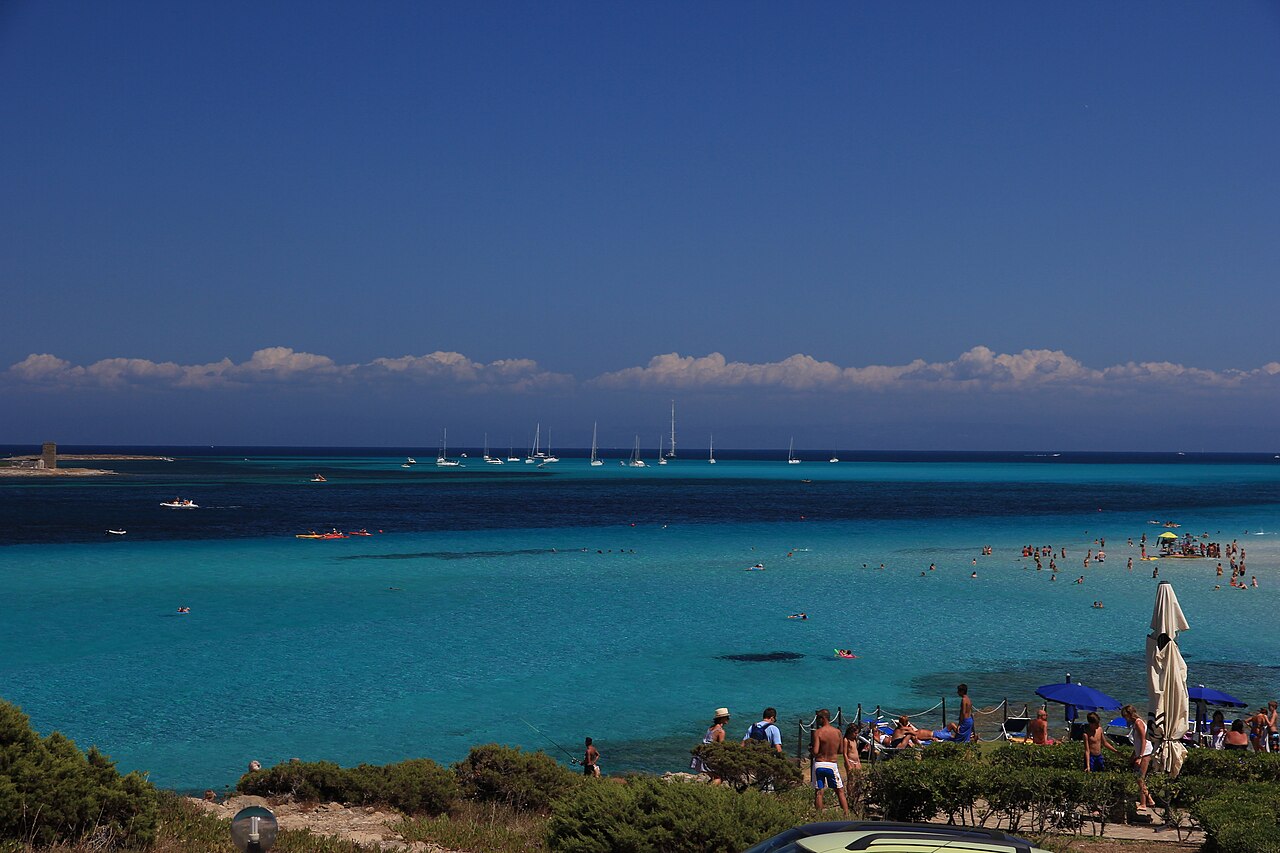
Things to know before visiting Sardinia: the short version
- Leave sand, shells and pebbles where they are. Regional Law No. 16/2017 sets a fine of €500 to €3,000 (roughly £425 to £2,550), and checks happen at airports and ferry ports too.
- The most famous beaches have to be booked. La Pelosa, Cala Goloritzé and about a dozen others have a daily cap on visitors, and without a QR code you will not get in.
- At La Pelosa and Tuerredda your towel goes on a mat, not on the sand.
- From 1 June to 31 October fire-prevention rules apply, with fines of €5,000 to €50,000.
- ZTL zones in Cagliari and Alghero are watched by cameras. Driving in without a permit costs €83 to €332, and the fine will find you back home, either directly or through your car hire company.
- Wild camping is banned across the whole island (fine €100 to €250).
- Never leave a car full of luggage by the beach. Hire cars broken into on the way from the airport straight to the sea are an annual classic around Olbia.
- Cows, sheep and goats wander onto the roads, especially at night and inland.
Sardinia rules: 25 things to know before you go
We have split the list into three parts: beaches and nature, the car and the roads, and finally money, accommodation and everyday life.
Sardinia beach rules and nature
Most fines tourists collect in Sardinia are handed out on the beach. It is not harassment. It is a late reaction to the fact that so many people were coming to the most famous spots that they were starting to carry them away grain by grain.
1. Sand, shells and pebbles stay on the beach
This is rule number one, and the only one on the list that exists only in Sardinia. Article 40 of Regional Law No. 16 of 2017 bans taking away, keeping or selling even small amounts of sand, pebbles, stones and shells from the coast or the sea. The administrative fine is €500 to €3,000 (roughly £425 to £2,550), and it is enforced by the forestry corps and the local police.
So can you take sand from Sardinia as a souvenir? No, and this is not a dead letter. In May 2026 the forestry corps stopped a tourist at the port of Porto Torres with more than forty kilos of sand and pebbles in her car, and customs officers at Cagliari airport confiscated 125 kilos of sand, pebbles and shells in a single season. Airport X-ray scanners in Olbia and Cagliari will spot it in your bag.
The most sensitive beaches are on the Sinis peninsula, above all Is Arutas and Mari Ermi, where instead of sand you walk on tiny grains of quartz the size of rice. The same ban covers archaeological finds (pottery shards near a nuraghe are not a souvenir), coral, sea creatures and protected plants. If you want something to take home, buy Sardinian pottery, a basket woven from asphodel or a bottle of myrtle liqueur.
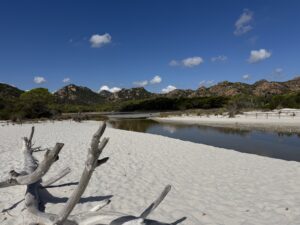
2. La Pelosa: booking, a towel mat and a cap of 1,500 people
From 15 May to 15 October 2026 the beach near Stintino has limited access. According to the official booking website, 1,500 people a day are allowed in and entry costs €3.50 per person. Children under 12 do not need a booking.
How does La Pelosa booking work? Five hundred places can be reserved at any time during the season; the remaining thousand are released two days ahead at 9:00. One booking covers up to four people and each person may hold only one booking per day. Once it is confirmed you have 30 minutes to pay or it lapses. QR codes are checked between 8:00 and 18:00, so if you turn up in the evening you can get onto the beach without a ticket.
The rule that surprises people most: you may not put your towel directly on the sand. It has to go on a mat (straw or plastic), which you can also buy on the spot. Smoking, dogs, soap and detergents and beach hawkers are banned as well. We would go to La Pelosa either right at eight in the morning or after six in the evening, when the coaches leave and the light over Asinara is at its best.
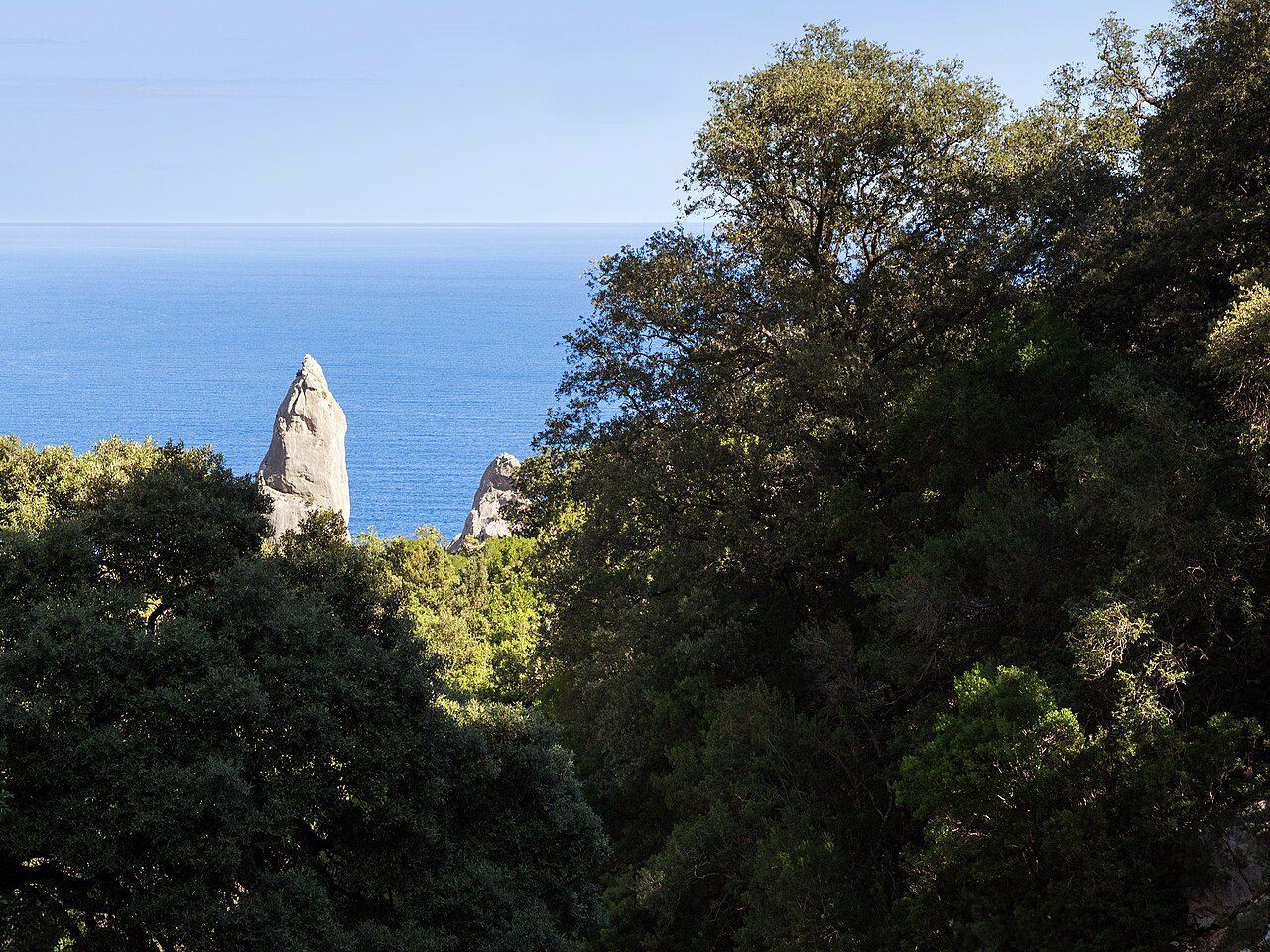
3. Cala Goloritzé: on foot only, and only with a booking
The cove with the rock spire near Baunei has the strictest regime of all the “ordinary” beaches. No more than 250 people may be there at once, entry costs seven euros in the 2026 season, and Cala Goloritzé booking is done through the Heart of Sardinia app or website. Bookings open 72 hours ahead and tickets are non-refundable. Each booking is for one person, and your code is checked both at the start of the trail and on the beach.
Landing from boats is forbidden, which leaves the trail from the Golgo plateau: 3.6 kilometres with around 500 metres of descent, about an hour and a half down and up to two hours back up. The main time slot runs from 7:30 to 17:00, and the park management strongly recommends being at the trailhead by 10:00. In summer an afternoon slot from 12:00 to 17:00 sometimes opens as well. The municipality requires closed shoes with a good grip and enough water. Dogs are allowed on the trail but not on the beach, and there are no facilities at the bottom, so your rubbish goes back up with you.
We like to set off on the first slot at around half past seven, while the trail is still in the shade of the oaks. There is more about the whole area, boat trips and the other coves in our article on the Golfo di Orosei.
4. Other Sardinia beaches that need booking: no app, no entry
Beaches in the north-east, in the south and in the Gulf of Orosei have quotas too, and every municipality has come up with its own system: in one place you book 48 hours ahead, in another 72; some charge per person, others per car. Here is the overview for the 2026 season:
| Beach (municipality) | Daily limit | Price 2026 | Period | How to book |
|---|---|---|---|---|
| La Pelosa (Stintino) | 1,500 people | €3.50, children under 12 free | 15 May to 15 Oct | spiaggialapelosa.it |
| Cala Goloritzé (Baunei) | 250 people at a time | €7 | summer season | Heart of Sardinia, 72 h ahead |
| Cala Brandinchi (San Teodoro) | 1,447 people | €2, guests of local accommodation €1, children under 12 free | 1 Jun to 30 Sep | santeodorospiagge.it or the San Teodoro Spiagge app, from 18:00 two days ahead |
| Lu Impostu (San Teodoro) | 3,352 people | same as Brandinchi | 1 Jun to 30 Sep | same system, you get a wristband on site |
| Tuerredda (Teulada) | 1,100 people | €3 | 2 Jun to 15 Oct | spiaggiatuerredda.it, max. 6 people per booking, checks 8:00 to 18:00 |
| Punta Molentis (Villasimius) | 150 people by land at a time, 100 by sea, 70 cars a day | €10 per person, parking extra (around €10 per car) | 6 Jun to 31 Oct | pass.brav.it, you enter your number plate and cannot change it afterwards |
| Cala Mariolu and Cala Biriala (Baunei) | 700 and 300 people by sea | the municipality planned €2 per cove, €3 for a multi-cove pass | 1 May to 20 Oct | Heart of Sardinia, mostly handled when you arrive by boat |
| Cala Luna (Dorgali and Baunei) | 900 people (450 + 450) | ticket usually arranged by the boat operator | summer season | the portal sells quotas to boat companies; independent visitors only get the places left on the beach |
| Rena Bianca (Santa Teresa Gallura) | around 1,015 people | approx. €3.50 (the municipality does not publish the price) | 1 Jun to 30 Sep | lovesantateresa.it, 30% of places any time, the rest 72 h ahead |
| Cala Coticcio and Cala Brigantina (Caprera) | 60 people, 4 groups of 15 | €3 park fee plus the guide’s fee, children under 12 exempt from the fee | park season | only with a guide authorised by La Maddalena National Park |
At Punta Molentis the 2026 municipal ordinance bans your own parasols, gazebos and tents. The only exceptions are children under 10 and people over 65, and even their parasols are planted by staff with a special drill so the dunes are not damaged. Arrivals from the sea are allowed only with an authorised operator and for no more than an hour. Older guidebooks describe Cala Luna as freely accessible, but a quota has applied since 2024.
Cala Coticcio is off limits without a guide, and scrambling down on your own gets you fined. You pick a guide from the list on the national park website, ideally at least three days ahead, and with the guide’s fee the visit can easily climb to €25. The famous Spiaggia Rosa on Budelli is closed completely: you may not set foot on the sand or even enter the water. How to see it at least from a boat is covered in our article on the pink beach in Sardinia.


💡 Treat beach bookings like concert tickets. In July and August the popular days are gone within minutes of release. Download the apps and register before you leave home; filling in forms on the beach with one bar of signal is time wasted. And almost nowhere does the beach ticket include parking.
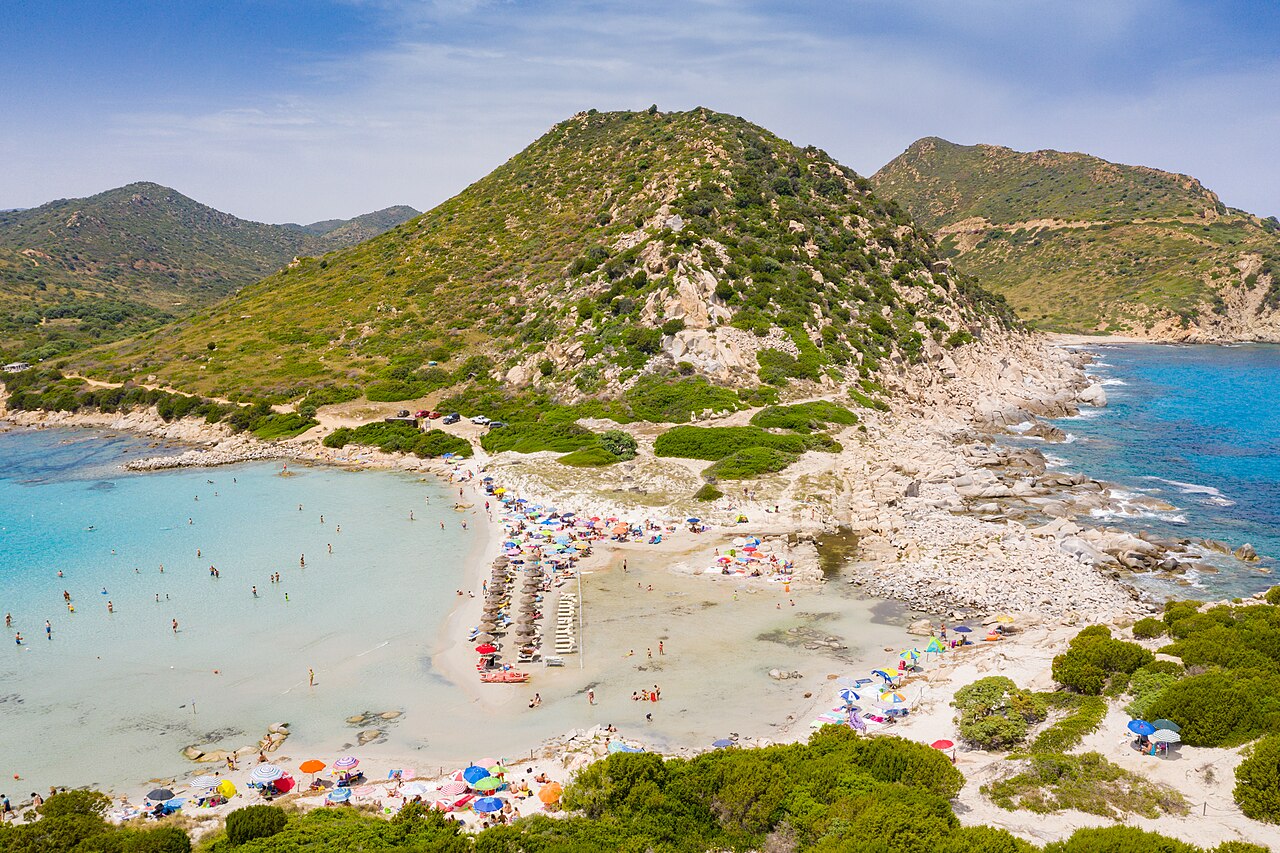
5. Dunes, litter and cigarettes on the beach
The regional government sums up four rules for protecting beaches. Besides the sand, there is a ban on walking on the dunes or driving onto them, with a fine of €100 to €1,000. Dumping rubbish costs €1,000 to €10,000, and small items such as a cigarette end, a receipt, chewing gum or a paper tissue cost €30 to €150.
Smoking on the beach is banned by individual municipalities; you will know from the “Vietato fumare” signs. Fines in Sardinian towns range from roughly €25 to €500.
6. Wild camping and sleeping in your car
Regional Law No. 16/2017 bans camping with a tent, caravan, motorhome or similar vehicle anywhere on the island outside campsites and approved stopover areas, with a fine of €100 to €250. On top of that, municipal beach ordinances often ban overnight stays even in a motorhome within 200 metres of the beach and in the coastal pine woods. Sleeping in the car above a cove and going for a swim at dawn is exactly the plan that ends with the police knocking on the window.
Campsites start at around €14 per person per night. General advice on camping in Italy is in our guide Camping in Italy: rules, prices and how to avoid a fine, and a selection of sites by the sea in 13 best beach campsites in Italy.
7. Wildfires: from June to October, bans with five-figure fines
Sardinia burns every summer. The regional fire-prevention rules apply during the high-risk period from 1 June to 31 October (the region can move the dates depending on the weather). According to the civil protection agency, breaking them is punished with a fine of €5,000 to €50,000 (roughly £4,250 to £42,500), even for something that could only potentially start a fire. Nothing has to actually burn.
For a visitor that means no fires and no barbecues outside places where they are explicitly allowed, no fireworks or sky lanterns, and no cigarette ends out of the window or into the grass. A less well-known rule concerns parking: a car with a hot catalytic converter must not be parked touching dry grass. Report a fire on 1515 (forestry corps) or 112. If you see smoke over the road you are about to take, turn round: with the wind, fires spread faster than you think.
8. Beach flags and currents
From the 2026 season, a coastguard ordinance gives the flags on lifeguarded beaches a single meaning across the island. Green means lifeguards are on duty and conditions are good. Yellow means the service is running but the sea or the wind may be dangerous. Red means swimming is dangerous or not advised, with or without a lifeguard, so you may see it on a beautiful day when nobody is on duty.
Most Sardinian beaches, though, have no lifeguards at all. On the wild beaches of the west coast, such as the Costa Verde, currents form mainly when the mistral blows. Our rule: if none of the locals is swimming, it is not because they feel cold. If a current pulls you away from the shore, swim sideways, parallel to the beach. The coastguard emergency number is 1530.
9. The mistral can wreck your whole plan
The mistral (maestrale), a cool north-westerly wind, blows in summer too and hits mainly the west coast and the Strait of Bonifacio. When it picks up, boat trips to La Maddalena or to the Grotta di Nettuno are cancelled and ferries are often delayed. The east coast is usually sheltered at the same time, so it makes sense to keep a couple of free days in your plan and move across. More about the winds and when to go is in our guide to Sardinia weather.
10. Jellyfish, weever fish in the sand and ticks
The most common jellyfish in Sardinian waters is Pelagia noctiluca, the mauve stinger: small, purple and with a nasty sting. If you get stung, rinse the area with seawater (not fresh water), carefully remove any bits of tentacle without using tweezers, and then hot water at around 40 to 45 °C for at least half an hour helps. Do not use vinegar, lemon, ammonia, alcohol or ice, and do not rub the spot.
More treacherous is the weever fish (tracina in Italian), which hides in the sand in shallow water with venomous spines on its back. First aid is again hot water, but because the spines can carry bacteria, a sting is a reason to see a doctor. Water shoes protect you against weever fish and sea urchins alike.
Ticks live mainly in the maquis and on inland pastures. Sardinia is one of the Italian regions with the highest incidence of Mediterranean spotted fever (febbre bottonosa), which ticks transmit from July to October. Tick-borne encephalitis is not endemic on the island, so you do not need to think about vaccination for Sardinia alone. Insect repellent, long trousers for hikes and a check for ticks in the evening are still worth it.
11. Sun and midday heat
In July and August temperatures regularly top 30 °C and climb towards forty when the scirocco blows. So: beach in the morning and late afternoon, lunch in the shade at midday, or a cave or a museum. For hikes like Goloritzé or the Gola su Gorropu canyon, start early in the morning, with litres of water and a hat. High-factor sun cream belongs in your bag even in May and October.
12. Sardinia drone rules and national parks
A drone over 250 grams, or a lighter one with a camera, has to be registered in the Italian D-Flight system and carry an identification QR code. For recreational flying with machines over 250 grams, third-party liability insurance is also compulsory and the pilot needs an online certificate. The D-Flight map shows where you may fly.
The La Maddalena archipelago, Asinara and other protected areas are no-fly zones, and flying without permission from the park authority is punished with a fine of up to €10,000 and confiscation of the drone. The airports in Olbia, Cagliari and Alghero also have no-fly zones around them.
13. Boats: illegal trips and boats you can hire without a licence
Watch out for offers from a “mate with a boat” in the harbour. On an illegal boat the passenger risks a fine too, and in an accident no insurance pays out. Buy boat trips from official operators at the harbour or online.
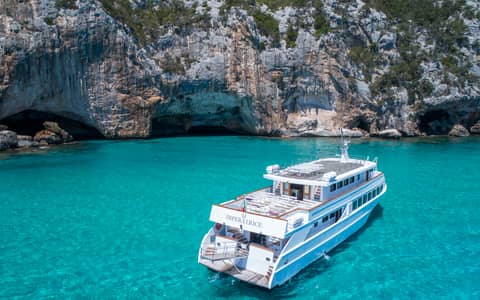
Small motorboats and RIBs (gommoni) can be hired without a boat licence. Around the coves, though, there are anchoring zones and buoys, landing at Goloritzé is forbidden and you may not anchor off Budelli at all. In the Gulf of Orosei a rota system limits the number of boats at the coves, and at some beaches boats may only stay for one to two hours. When the boats run and where from is covered in our articles on the Golfo di Orosei and Cala Gonone.


Santa Maria Navarrese: full-day boat trip along the Costa di Baunei
Driving in Sardinia: tips on the car and the roads
Without a car you will see only a fraction of Sardinia. But the car is also the most common source of fines, stress and stolen luggage.
14. Sardinia ZTL zones: a gate you drive through once and pay for six months later
A ZTL (zona a traffico limitato) is a limited traffic zone, typically a historic centre, where cameras read number plates. When the sign says “Varco attivo”, the zone is active and you may not enter. “Varco non attivo” means you can drive in at that moment. Under the Italian highway code, entering without a permit costs €83 to €332 (roughly £70 to £280), plus about €14 for processing and delivery. Pay within five days of receiving the notice and you get 30% off.
Cagliari has six zones, each with different hours that change with the season. Current times are on the City of Cagliari website. In Alghero, according to local guides, driving through the old town is allowed only in the morning from 8:00 to 10:30 and in the afternoon from 14:30 to 16:30. Smaller towns and resorts have zones too, often only in summer and in the evening.
If you are staying inside a zone, your host must register your number plate with the local police, otherwise the fine arrives anyway. With a hire car, the fine goes to the rental company first, and it usually adds its own admin fee. We leave the car in a car park on the edge of the centre and walk in. The historic centres of Sardinian towns are so small that it is quicker anyway.
15. Sardinia parking rules: line colours and beaches before nine
Blue lines mean paid parking (the machine often takes coins only; you can also pay in an app such as EasyPark). White lines are free, sometimes with a time limit, in which case a parking disc (disco orario) goes behind the windscreen. Yellow lines are for residents, disabled drivers or deliveries. According to local guides, in Alghero in summer (1 June to 30 September) blue-line parking is free between 14:00 and 17:00 and from midnight to 9:00, but always check exceptions like this on the machine.
Car parks at well-known beaches are nearly always paid, at Cala Brandinchi around €2.50 an hour. In high season the rule is simple: if you are not there by nine in the morning, you will not find a space. And on the verge of the road down to the beach, where “everyone parks”, the local police tuck tickets under the wipers at midday.
16. Roads and rules: no motorways, no tolls, lots of hairpins
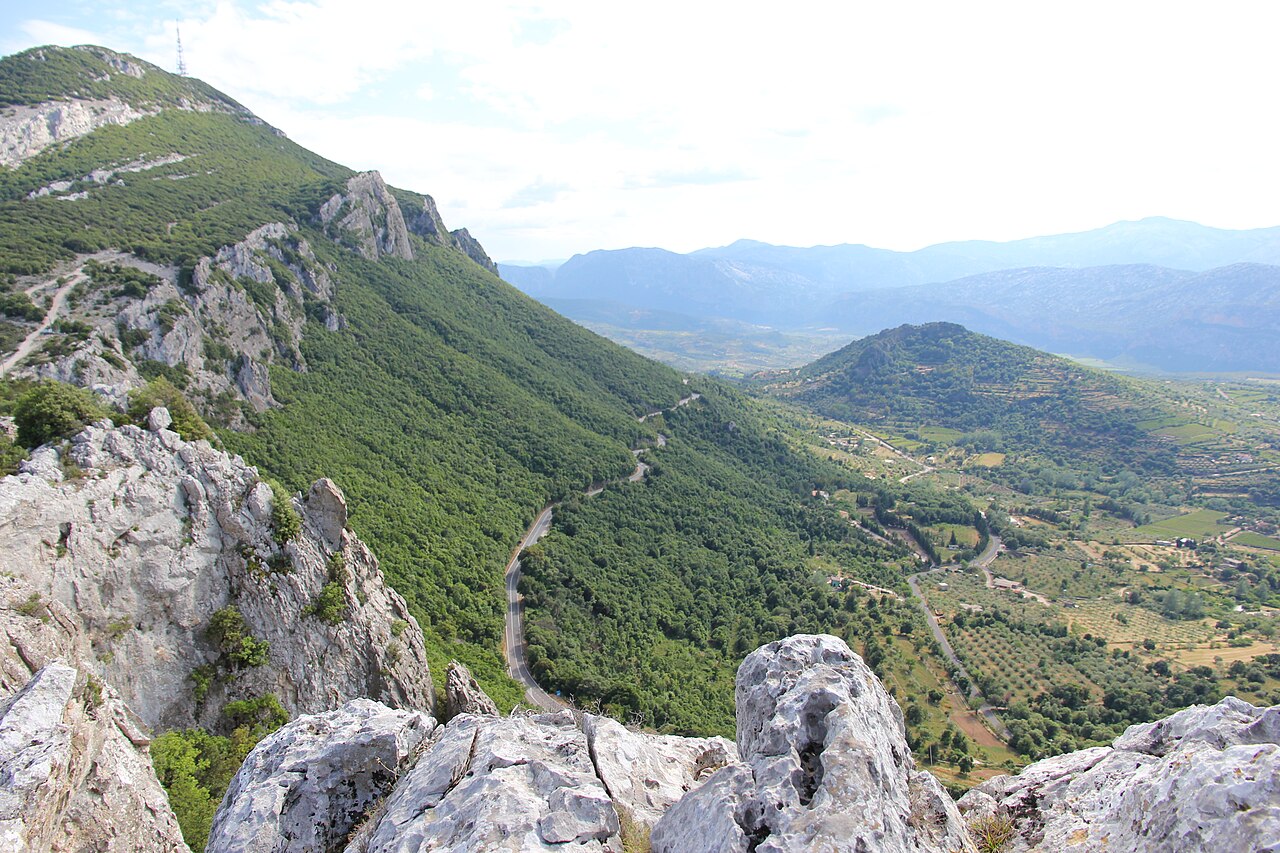
Sardinia has no motorways and no toll booths. On the four-lane SS 131 from Cagliari to Sassari and on its branch via Nuoro to Olbia the limit is up to 110 km/h, on other roads outside built-up areas 90 km/h and in towns 50 km/h. The SS 125 Orientale Sarda in the east is beautiful but slow and twisty: if the satnav says an hour, allow an hour and a half.
Outside built-up areas dipped headlights are compulsory during the day, the drink-drive limit is 0.5 g/l (zero for drivers who have held a licence for less than three years), and holding a phone while driving can get your licence suspended for one to three months, with no discount for paying quickly. Speed cameras are common and the fines reach you at home too. Locals use their indicators only occasionally, so drive defensively at junctions in small villages, even when you have right of way.
17. Cows, sheep and goats on the road
This surprised us more than anything else in Sardinia, and the statistics say it is not just an impression. Between 2020 and 2025, 6,995 collisions with animals were reported on the island, more than twice as many as in the previous five years. Cows, horses, sheep, goats, dogs, wild boar and deer roam the roads, and it is worst after dark. Is it safe to drive in Sardinia at night? Yes, if you take it slowly: inland and on the Orientale Sarda, expect anything round the next bend, and when you meet a herd, just stop and wait.
18. Car break-ins and luggage in the boot
Every summer the local press reports cars broken into at beach car parks around Olbia, for example at Pittulongu and Porto Istana, and at Rena Bianca in Santa Teresa Gallura. The pattern is always the same: tourists land, pick up their hire car and drive straight to the sea with their suitcases in the boot.
So on your first day, go to your accommodation first and only then to the beach. Leave nothing in the car, not even an empty bag or a charger, and park in busy, well-lit places. Pickpockets work mainly on the seafront promenades in Cagliari and Olbia, at markets, in ports and on crowded beaches.
19. Car hire in Sardinia: credit card, deposit and insurance
Most rental companies want a credit card in the driver’s name. Many will also rent to you on a debit card, but on worse terms or with a deposit that can exceed €1,000. Some budget rental firms push expensive extra cover at the desk, especially if you have no credit card. The base price usually comes without full cover; extra insurance costs roughly €5 to €10 a day.
When you pick the car up, photograph and film it from all sides, including the fuel gauge, and when you return it, get written confirmation that everything is fine. Before you travel, check what your own driving licence needs in Italy (for non-EU licences, whether an International Driving Permit is required). How to book the car, accommodation and ferry yourself is covered in our guide to booking a trip to Sardinia.
20. Petrol stations: “self” is cheaper and it will not be any different at night
Italian petrol stations often have two kinds of pump: self (self-service) and servito (an attendant fills up for you). The same fuel costs noticeably more with service. At night, on Sundays and around midday smaller stations close and only the payment machine works. Carry some small notes: the machine sometimes rejects cards, and it gives no change for notes, only a printed receipt.
Inland and on the east coast there are stretches where the next pump is an hour’s drive away along hairpin bends. Before the Orientale Sarda or a trip into the Gennargentu mountains, fill up even if you still have half a tank.
Money, accommodation and everyday life
The last five are about things that will not get you fined, but can still spoil a day or empty your wallet.
21. Cash, coperto and sunbeds that cost as much as dinner
Cash comes in handy at small beach kiosks, parking machines, markets, in mountain villages and with some hosts when you pay the tourist tax. We always carry a few dozen euros in small notes and coins.
In restaurants, expect a line on the bill called coperto, a cover charge for the table setting and bread, charged per person. It is normal and perfectly legal in Italy. A sunbed and parasol on the famous beaches of the north-east can cost up to €100 a day, so ask the price before you lie down.
22. Your host needs your ID, and scammers know it
Accommodation providers have to register their guests with the police, so they will ask for your ID card or passport, often in advance. Scammers exploit this and send messages outside the booking platform asking for a photo of your document or for the balance to be paid into an unknown account. Send your details only through the platform’s official channel or the host’s own, and never send payments outside the platform.
On top of the price, a tourist tax (imposta di soggiorno) is added on the spot. Each municipality sets its own, and it is often not included in the booking. How to choose accommodation and which area to stay in is covered in our guide on where to stay in Sardinia.
23. Siesta, Ferragosto and the closed off-season
Most shops and smaller restaurants close roughly between 13:00 and 17:00. Dinner is served from half past seven or eight; at six you will probably not get anything cooked.
The critical day is 15 August, the Ferragosto holiday: the whole of Italy is on holiday, parking is impossible and accommodation is at its most expensive of the year. From November to March Sardinia is quiet and cheap, but many seaside businesses close, and boat trips in the Gulf of Orosei usually run from May to September.
24. Can you drink tap water in Sardinia? Yes, but not always and not everywhere
Mains water in Sardinia is officially drinkable, but it often tastes of chlorine, so most locals drink bottled water. Municipalities also issue temporary “do not drink” notices fairly often, when the water company Abbanoa measures values above the limits. In recent years this has affected, for example, parts of Sassari and Alghero, and the coast between Sarroch and Domus de Maria. If you are not sure, ask your host or check the municipality’s website. We refill our bottles at public fountains (fontanelle) where the water is clearly marked as drinkable.
25. Italian rules that catch people out: children, fountains and fakes
A few rules that apply across Italy and that foreign ministries warn travellers about. Under Italian law, children under 14 must not be left unsupervised, and the person responsible faces a prison sentence of six months to five years. Cooling off in a fountain is fined without mercy, from €500 upwards. And buying fake goods from street and beach sellers is an offence for the buyer too, with a fine of up to €10,000.
Check the entry requirements for your nationality before you go: EU citizens can travel on a valid national ID card, UK citizens need a passport, and children need their own document. Bring your EHIC (or GHIC if you live in the UK) and travel insurance, because the card does not cover things like repatriation home.
Sardinia fines at a glance
Pound amounts are converted at €1 ≈ £0.85 and rounded.
| What for | Fine | Roughly in pounds |
|---|---|---|
| Taking sand, pebbles, stones or shells | €500 to €3,000 | £425 to £2,550 |
| Breaking fire-prevention rules (1 Jun to 31 Oct) | €5,000 to €50,000 | £4,250 to £42,500 |
| Dumping rubbish on the beach | €1,000 to €10,000 | £850 to £8,500 |
| Cigarette end, receipt or chewing gum on the beach | €30 to €150 | £25 to £130 |
| Walking or driving on the dunes | €100 to €1,000 | £85 to £850 |
| Wild camping and overnight stays outside permitted areas | €100 to €250 | £85 to £215 |
| Entering a ZTL without a permit | €83 to €332 + approx. €14 for delivery | £70 to £280 |
| Flying a drone in a national park without permission | up to €10,000 and confiscation of the drone | up to £8,500 |
| Bathing in a fountain | from €500 | from £425 |
| Buying fake goods from a street seller | up to €10,000 | up to £8,500 |
And the numbers worth saving in your phone: 112 is the single emergency number, 118 ambulance, 115 fire brigade, 1515 forestry corps for reporting fires and 1530 coastguard for accidents at sea. British nationals can reach the British Embassy in Rome through the contact page on GOV.UK; other visitors should note their own embassy’s details before they travel.
💡 An Italian fine can arrive a year later. For drivers resident abroad, the Italian authorities must serve the notice of the offence within 360 days of the offence being established. With a hire car, the clock only starts when the rental company names you as the driver, so the letter can arrive more than a year after your holiday. Do not throw away your rental agreement or your parking receipts just yet.
Where to stay to avoid the traps
Half the problems on this list are solved by choosing the right base. If you stay in Stintino, you are on La Pelosa at eight in the morning before the first coach arrives; if you stay in Cagliari or Alghero outside the ZTL with your own parking, camera gates and blue lines are not your problem. We go through the regions of the island by type of holiday in our guide on where to stay in Sardinia. Here are the towns that suit this list best, with a few specific places in each.
When choosing, check three things. Private parking: the car does not spend the night on the street and you do not have to deal with ZTLs or blue lines. The CIN code (codice identificativo nazionale): since 2025 every legal tourist rental in Italy must have one and show it in the listing; on Booking.com you will find it at the bottom of the page as the licence number. A listing without a code, especially off-platform, is a reason to be careful. And air conditioning: in July and August it is hard to sleep without it, and some apartments only have a ceiling fan. All the places below show a licence number on Booking.com, and for each one we say whether it has parking.
Stintino
Places to stay in Stintino: on foot or a few minutes by car to La Pelosa.
- Hotel Geranio Rosso (Stintino): a three-star hotel in the village itself, 200 metres from the beach, with air-conditioned rooms and a restaurant that also serves pizza. Parking is free, so in the morning you only drive the short hop to the La Pelosa car park. Rated 8.8 on Booking.com.
- Hotel Cala Reale (Stintino): several buildings in a garden with a pool on the Gulf of Asinara, about a kilometre from the sea and 3 km from La Pelosa. Free private parking and a rating of 8.9 from more than 1,300 reviews; best suited to families.
- Hotel Silvestrino (Stintino): a renovated hotel 100 metres from the shore, five minutes by car from La Pelosa. Rooms have air conditioning and the hotel restaurant is known for its fish. Booking.com does not list parking, so ask before you go.
Santa Maria Navarrese
Places to stay in Santa Maria Navarrese: the seaside part of Baunei, the closest base to the Goloritzé trail, and boats to the Gulf of Orosei leave from here too.
- Hotel Santa Maria (Santa Maria Navarrese): 200 metres from its own private beach, rooms with a balcony over a shady garden and free private parking at the hotel. Rated 8.9, and guests on Booking.com score the breakfast as exceptional.
- Hotel Agugliastra (Santa Maria Navarrese): a small three-star hotel on Piazza Principessa di Navarra, 100 metres from the beach, with air-conditioned rooms. Booking.com does not list parking, so if you are coming by car, ask the hotel where to leave it.
Cala Gonone
Places to stay in Cala Gonone: the base for boat trips to Cala Luna and Cala Mariolu. More in our article on Cala Gonone.
- Hotel Resort Nuraghe Arvu (Cala Gonone): below a rocky hill, 500 metres from the beach, with views of both the sea and the mountains. Air-conditioned rooms open onto the garden, and there is a pool and free parking right by the hotel. Rated 8.4.
- Hotel Caramare (Cala Gonone): a three-star hotel on the seafront, 200 metres from the main beach. All rooms have air conditioning and a sea-view balcony; rated 9.1. Booking.com does not list private parking.
- Club Esse Palmasera (Cala Gonone): a large four-star resort 500 metres from Palmasera beach, with private parking, air conditioning and three pools. A rating of 7.0 from more than 3,000 reviews suggests it is a practical base rather than an experience in itself.
San Teodoro
Places to stay in San Teodoro: guests of registered accommodation in the municipality pay the reduced fee of €1 instead of €2 at Cala Brandinchi and Lu Impostu.
- Hotel L’Esagono (San Teodoro): right on Cala d’Ambra beach, a quarter of an hour’s walk from the centre. Rooms open onto the garden, and there are two pools and free private parking. Rated 8.3.
- Hotel Bonsai (San Teodoro): 500 metres from the historic centre and a ten-minute walk to the sea, with air-conditioned rooms, an indoor pool and free CCTV-monitored parking. Rated 9.0.
Villasimius
Places to stay in Villasimius: close to Punta Molentis and the other beaches of the south-east.
- Hotel Mariposas (Villasimius): a smaller hotel with a garden and an outdoor pool; the rooms are air-conditioned and on-site parking is free. Rated 9.4 on Booking.com.
- Hotel Simius Playa (Villasimius): a four-star hotel 90 metres from Simius beach, with a seasonal pool, air conditioning and free private parking. You walk to the sea in the morning and the car stays at the hotel. Rated 9.2.
- Green Village Resort (Villasimius): apartments with a veranda between Simius beach and the centre, with a large pool. Air conditioning and outdoor parking are included, and the private beach is 900 metres away. Rated 8.7.
Alghero
Places to stay in Alghero: when choosing, check whether the property is inside the ZTL and whether it has parking. We describe the town and its surroundings in our article on Alghero.
- Hotel Catalunya (Alghero): a four-star hotel opposite the marina, five minutes’ walk from the historic centre, with private parking and air-conditioned rooms. You leave the car at the hotel and walk into the old town. Rated 8.7 from more than 2,200 reviews.
- Hotel Florida (Alghero): by Lido di San Giovanni beach, 800 metres from the historic centre along the promenade. It has private parking, two pools and a restaurant with sea views; rated 8.8.
- Hotel Oasis (Alghero): a few steps from the beach, 7 km from the airport and ten minutes by bus to the centre, with the stop right outside. Air-conditioned rooms, a pool and free private parking; rated 8.5.
What we would do differently
Sardinia is not an island of bans. The rules revolve around a handful of the most famous beaches and around things a considerate guest would not do anyway. If we went again, we would not chase bookings for every famous beach. We would pick one or two that we are really looking forward to and leave the other days for nameless coves, reached by a dirt track off a minor road, where the car park holds three cars with local plates. Sardinia has hundreds of them, and no app keeps watch over them.
And we would keep one day completely unplanned. When the mistral blows and the boats stay in port, just drive over to the other side of the island and see where it looks nice.
Sardinia travel tips: frequently asked questions
Can you take sand from Sardinia?
No. Regional Law No. 16/2017 bans taking away, keeping or selling even small amounts of sand, pebbles, stones and shells from the coast or the sea. The fine is €500 to €3,000, and there are checks at Olbia and Cagliari airports and at ferry ports.
Which beaches in Sardinia need booking?
In the 2026 season mainly La Pelosa near Stintino (€3.50, 1,500 people a day), Cala Goloritzé (€7, 250 people), Cala Brandinchi and Lu Impostu near San Teodoro (€2), Tuerredda (€3), Punta Molentis (€10), Rena Bianca and the coves of Cala Mariolu, Cala Biriala and Cala Luna in the Gulf of Orosei. Cala Coticcio and Cala Brigantina can only be visited with an authorised guide. Most other beaches are freely accessible.
How much is La Pelosa and how do you book it?
Entry costs €3.50 per person, and children under 12 do not need a booking. You book on spiaggialapelosa.it for the period from 15 May to 15 October. Five hundred places can be reserved at any time, and a thousand are released two days ahead at 9:00. Your towel must go on a mat.
What should you watch out for when driving in Sardinia?
Mainly the ZTL zones in the historic centres of Cagliari and Alghero, where cameras read number plates and the fine is €83 to €332. Then animals on the road, especially at night inland, the slow, winding roads in the east, and break-ins at beach car parks.
Is Sardinia safe for tourists?
Yes, it is one of the calmer destinations. The main risk is petty theft: from cars parked by beaches, on the beaches themselves and from pickpockets on the promenades in Cagliari and Olbia. In nature, the risks are wildfires in summer and currents on unguarded beaches. Earthquakes are practically unknown on the island, which lies in Italy’s lowest seismic zone.
Can you drink the tap water in Sardinia?
Generally yes. Mains water is officially drinkable, but it often tastes of chlorine and locals tend to drink bottled water. Municipalities also issue temporary “do not drink” notices from time to time. If you are not sure, ask your host or check the municipality’s website.
Are there jellyfish in Sardinia?
Yes. The most common is the small purple Pelagia noctiluca. After a sting, rinse the area with seawater, remove any bits of tentacle, and hot water at around 40 to 45 °C helps. Do not use vinegar, lemon or ice.
Is wild camping allowed in Sardinia?
No. Camping with a tent, caravan or motorhome outside campsites and approved stopover areas is banned across the whole island, and the region gives a fine of €100 to €250. Municipal ordinances also often ban overnight stays in a motorhome within 200 metres of the beach.
Where to go next
- Sardinia holiday guide: package or independent, getting there, regions and itineraries.
- What to see in Sardinia: an overview of places all over the island.
- Booking a trip to Sardinia: how to book flights, a car, accommodation and the ferry yourself.
- Golfo di Orosei: coves, boat trips, treks and everything about Cala Goloritzé and Cala Luna.
- The pink beach in Sardinia: why Spiaggia Rosa is closed and how to see it at least from a boat.
- Sardinia weather: temperatures month by month, winds and when to go.
- 13 best beach campsites in Italy: if you fancy Italy by the sea with a tent or a campervan.
Potřebujete pomoct s cestováním?
-
Ubytování 🏨
Vyberte si to nejlepší ubytování, ať už jste kdekoliv, přes Booking.com. -
Půjčení auta 🚗
Auto si snadno najdete přes Booking.com, kde máte často slevu díky ubytování, nebo Rentalcars.com, kde porovnáte nabídky většiny půjčoven. -
Zážitky 🎟️
Přes GetYourGuide.com si vyberete z nejrůznějších výletů i zážitků po celém světě, navíc se zrušením zdarma do 24 h předem.