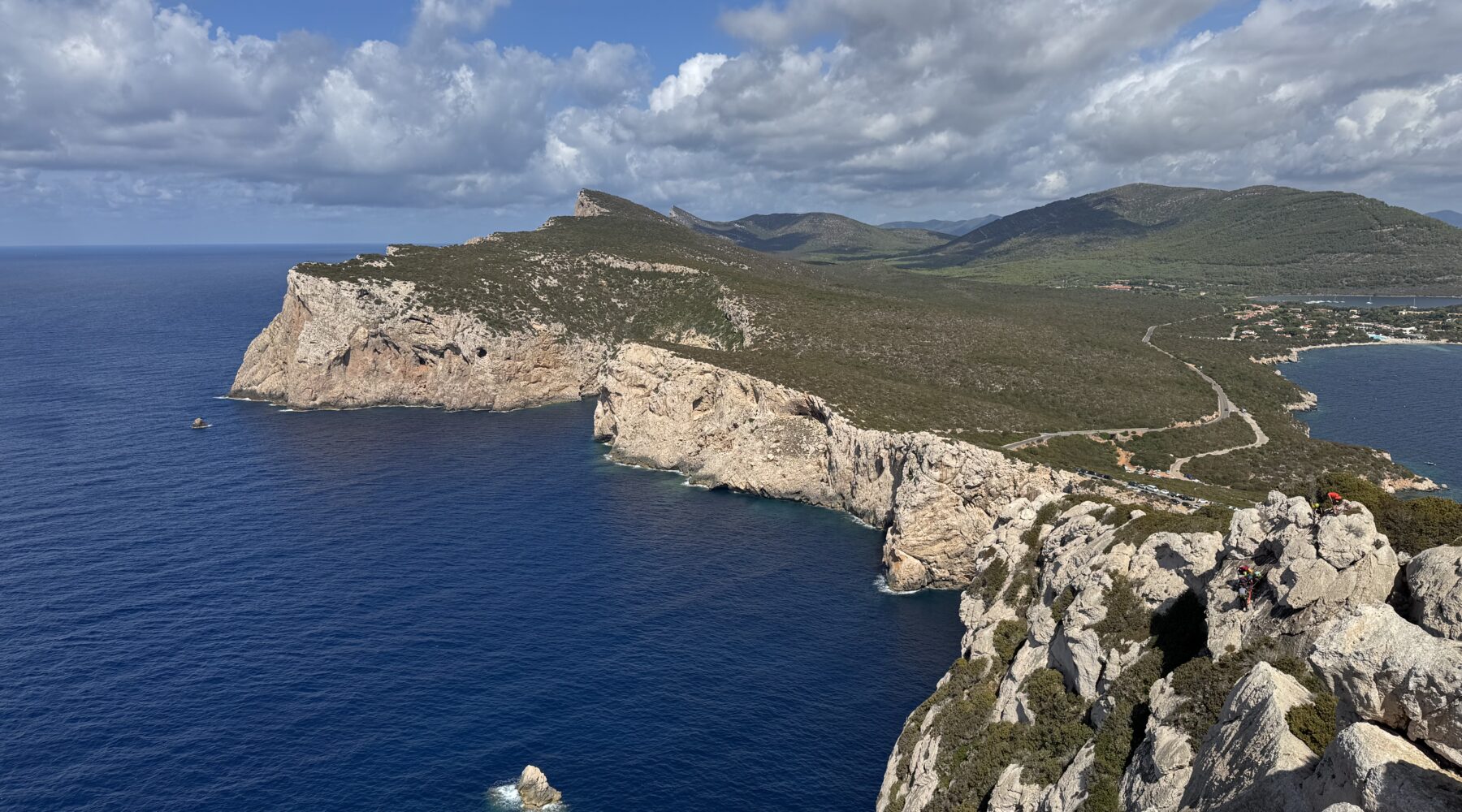
Last updated 7.10.2026
Most people planning a Sardinia holiday hit the same fork in the road before they pay for anything: book a package, or put the trip together yourself? Search results are mostly tour operators, so you rarely get a straight answer. Here is ours. Sardinia is the second largest island in the Mediterranean (24,090 km²), it has three international airports, and the coastline changes character every few dozen kilometres. A package gets you to one beach. A hire car opens up the whole island. Both make sense, just for different people and different budgets.
For specific places, see our overview of what to see in Sardinia. Monthly temperatures are in the guide to Sardinia weather, and hand-picked hotels in the article on where to stay in Sardinia.
Sardinia holiday at a glance
- From the UK you can fly direct to Cagliari: Ryanair from London Stansted and, in summer, British Airways from London Gatwick. Ryanair also flies Dublin to Cagliari. For Olbia and Alghero, check the current season’s routes before you plan the trip around them.
- A week’s package with flights started at around €600 (£510) per person without meals on the operators we checked, and all inclusive cost roughly double (about €1,300, or £1,100).
- Most package deals do not include the airport transfer, and many of the cheapest dates fly from airports you would not expect.
- Without a car you see a fraction of the island. A week with a small car and full insurance costs around €475 (£405) in summer and €360 to €375 in spring and autumn.
- The ferry only makes sense with your own car and a longer stay. The shortest crossings from mainland Italy take 5.5 to 7.5 hours.
- Choose the part of the island first, then the hotel. The north is the priciest and has the best swimming, the west the best value, the east wild coves and mountains, the south the best transport.
- May, June and September give the best mix of weather, prices and space. August around Ferragosto (15 August) is the most expensive and the most crowded.
Package holiday or independent trip to Sardinia?
- Most Sardinia package holidays are a stay in one beach hotel. The resorts on offer run into dozens, from Stintino in the north-west through Alghero, Palau, Cannigione, San Teodoro, Budoni and Orosei to Costa Rei, Villasimius and Santa Margherita di Pula in the south.
- Flights go mainly to Olbia and Cagliari, fewer to Alghero. The standard stay is 7 nights (8 days), some operators sell 6-night dates and you will also find short breaks of 3 nights. Besides beach stays, operators run touring holidays, for example an 8-day half-board tour of the island for around €1,220 per person.
- All inclusive is the exception in Sardinia. One operator we checked has a dedicated Sardinia all-inclusive page, but on the day of our check it listed not a single available holiday. Sardinia is not Turkey or Egypt: there are fewer all-inclusive hotels, they cost more and the season is shorter. Breakfast or half board is far more common, and plenty of deals come with no meals at all.
- The transfer is often extra. On most deals from one large operator the small print read “Transfer to the hotel not included in the price”. Many resorts lie tens of kilometres from the airport, and buses to the smaller ones run only a few times a day.
- Check where and how you fly. October dates on the operators we looked at left from Vienna, Bratislava, Munich, Frankfurt or Düsseldorf. Some last-minute deals had a change in Frankfurt or Munich, which turned a flight of just over two hours into a journey of 5 hours 40 minutes to 8 hours 25 minutes.
💡 Before you click “Book”, open the flight details. The departure airport, flight time and transfer information only show up there. Two deals at the same price can differ in that one flies direct with a transfer included and the other routes you through Frankfurt and leaves you to find your own way to the hotel.
When a Sardinia package holiday pays off
- You mainly want to rest by the sea and one beach, a pool and a couple of boat trips are enough. The operator saves you hours of planning, and the price is often similar to what you would pay booking the same things yourself.
- You are travelling with small children and need the hotel, the room and the flights to fit together. A package comes with legal protection if the operator goes bust (in the UK, look for ATOL protection on flight-inclusive packages) and a rep on the spot.
- You catch an early-booking or last-minute deal. One large operator had an eight-day all-inclusive for summer 2027 at around €830 instead of €1,260. Booking a flight and hotel separately in high season, you will struggle to get anywhere near that.
- You want a luxury resort. Forte Village near Pula (from around €2,330 per person on one booking site), Pullman Timi Ama in Villasimius and the hotels on the Costa Smeralda are standard catalogue items, flights and transfers included.
When to go independently
- You want to see more than one cove. The best places in Sardinia lie away from the main roads, often at the end of a dirt track.
- You want to stay at an agriturismo, in an apartment or in two different parts of the island. Operators rarely sell that.
- You are travelling outside the peak season. In May, June and September flights and accommodation are cheaper.
- You are driving. With your own car and a ferry you can combine Sardinia with Tuscany or Corsica.
The middle way: fly-drive from an operator
In our view, the third option suits a lot of people best. Specialist Sardinia operators sell flight-only seats and add a fly-drive deal on top: a return flight to Olbia or Cagliari and a small car with full insurance, collected right at the airport. You then book your own accommodation. With the specialist operator we checked, buying two travel services together (a flight and accommodation, for example) counts under its terms as a package with legal protection. Check the terms of whoever you book with.
The big operators also sell seats on their charter flights. Your best chance of a cheap seat is at the start and the end of the season, when the planes are not full.
| Package holiday | Independent trip | |
|---|---|---|
| Price per week (per person) | From about €600 with flights, all inclusive from about €830 with early booking | Flights (depend on your airport and dates) + accommodation + car |
| Airport transfer | Often not included | Car from the airport, train in Cagliari |
| Security | Protection if the operator goes bust, a rep on site | Down to you and the cancellation terms |
Package prices based on the offers of large tour operators in September 2026, converted from their original prices.
How to get to Sardinia
Sardinia has three international airports, and each serves a different part of the island. Cagliari (CAG) in the south is the largest and has flights all year. Olbia (OLB) in the north-east sits next to the Costa Smeralda and lives mainly on summer routes. Alghero (AHO) in the north-west is the smallest and Ryanair dominates it. Pick the airport by where you will stay, not by the fare. Saving €40 on a flight and then driving across the whole island is a bad deal.
Flights to Sardinia from the UK
Cagliari airport lists these routes to Britain and Ireland:
| Route | Airline | Season |
|---|---|---|
| London Stansted – Cagliari | Ryanair | check the current timetable |
| London Gatwick – Cagliari | British Airways | summer season |
| Dublin – Cagliari | Ryanair | check the current timetable |
Source: Cagliari airport (SOGAER) destination list, October 2026.
Olbia and Alghero publish their own route lists, and summer schedules change from year to year, so check the airport you actually want to land at before booking a hotel nearby. UK tour operators sell Sardinia package holidays with flights in season, but which regional airports they fly from varies by year, so compare the departure airport before the price. The very cheapest fares you see advertised are usually promotional tickets with a change, typically in Rome, Milan or Bergamo.
Connecting via European hubs
If there is nothing direct from your airport on your dates, the island is well connected through mainland Europe. Austrian Airlines and Ryanair fly from Vienna to Olbia and Cagliari, Lufthansa from Munich to Cagliari and Olbia, and Ryanair also links Cagliari with Kraków and Budapest. Within Italy, Rome and Milan have the most connections to all three Sardinian airports.
From the airport into town
Cagliari is the easiest: the airport sits right by the railway, and Trenitalia regional trains run to the centre roughly every 20 minutes from half past five in the morning until eleven at night. The ride takes about six minutes and a ticket costs €1.30 (about £1.10). In Olbia a city bus runs into town, and the airport is so close to the centre that you can walk. In summer Sun Lines buses also take people to the resorts in the north.
By ferry from mainland Italy
The ferry makes sense if you are bringing your own car for a longer stay. For a one-week holiday, a flight plus a hire car is almost always cheaper and, above all, faster: driving from Britain to Livorno or Genoa is a long journey in itself, and then you still have a night on the boat.
Ferries run all year, with extra sailings in summer. The routes are served by Moby, Tirrenia, Grimaldi Lines, GNV, Corsica Ferries and Ichnusa Lines.
| Route | Crossing time | How often | Price from (car + driver) |
|---|---|---|---|
| Piombino – Olbia | approx. 5.5 h | 3–4× a week | €60 |
| Civitavecchia – Olbia | 6.5–7.5 h | 1–3× a day | €55 |
| Livorno – Olbia / Golfo Aranci | 9–9.5 h | 4–5× / 2× a day | €45 / €60 |
| Genoa – Olbia / Porto Torres | 10–11 h | 2–4× / 2–3× a day | €75 / €90 |
| Civitavecchia – Arbatax | approx. 9 h | 2–3× a week | €120 |
| Civitavecchia / Naples – Cagliari | approx. 13 h | 2–4× a week | €150 |
| Bonifacio (Corsica) – Santa Teresa Gallura | approx. 1 h | 5–7× a day | €70 (foot passengers from €30) |
Indicative figures from the travel guide cestujlevne.com (5/2025). Prices are one way and the lowest available; in high season and at the last minute they are often double.
Each extra passenger costs €15 to €30 more, a berth in a cabin €30 to €150. With a car you check in at the port about 90 minutes before departure, on foot 30 minutes is enough. Book summer sailings with a car well ahead: the cheapest fares go first and are usually non-refundable.
Car hire in Sardinia: do you need a car?
Our answer is yes, and unlike on smaller islands, for the whole stay. Sardinia is big and public transport mainly connects the towns. Getting to beaches, mountains and coves by bus is either very hard work or impossible.
How much Sardinia car hire costs
A specialist Sardinia operator (Sardegna Travel) publishes a clear price list. It only rents to its own clients, but the figures make a useful benchmark:
| Car (6–7 days) | 1 Apr – 31 May 2026 | 1 Jun – 15 Sep 2026 | 16 Sep 2026 – 31 Mar 2027 |
|---|---|---|---|
| Toyota Aygo | approx. €370 | approx. €470 | approx. €355 |
| Fiat Panda 1.0 | approx. €375 | approx. €475 | approx. €360 |
| Škoda Fabia | approx. €480 | approx. €610 | approx. €460 |
| Nissan Qashqai | approx. €575 | approx. €730 | approx. €550 |
| Škoda Kodiaq (7 seats) | approx. €1,115 | approx. €1,410 | approx. €1,065 |
Source: Sardegna Travel car hire price list, prices including full insurance, converted from Czech crowns. Branches in Alghero, Cagliari, Cannigione, Olbia, Oristano and Siniscola.
Through comparison sites you can find a lower headline price: a seven-day rental from €250 in summer and from €120 in winter (cestujlevne.com), a small car from around €12 a day. The difference is usually the insurance. The base price rarely includes full cover, and extra cover costs €5 to €10 a day. You need a credit card to pick up the car. Rental firms will often accept a debit card too, but on worse terms or with a deposit of over €1,000. For July and August, book the car as soon as you have your flights. What to watch out for at the rental desk and when parking is covered in our article Sardinia: what to watch out for.
Roads and fuel. Sardinia has no motorway tolls and no vignette. Dual carriageways link the main towns; away from them the roads are narrow, winding and often in poor repair. Petrol cost €1.65 to €2 a litre, and every larger town has a filling station. Popular beaches charge for parking, typically €5 to €8 a day, on the Costa Smeralda €5 to €10.
Sardinia without a car: possible, but different
If you do not want to drive, stay in Cagliari or Alghero. Both towns have beaches and their own city buses (a 90-minute ticket costs €1.30), and from both you can reach the surroundings by bus and train. ARST intercity buses cover the whole island and cost roughly €1 for every 15 km. To bigger towns they run five to eight times a day, to smaller resorts sometimes only three. Buy tickets in advance at a kiosk, a tobacconist (tabacchi) or in the Tabnet and DropTicket apps. Drivers do sell them, but if they run out, they may not let you on.
Trenitalia trains run from Cagliari to Sassari and to Olbia (€18 for about 3 hours 20 minutes). ARST lines have their own tickets, which Trenitalia does not accept. In summer the historic Trenino Verde runs on five inland lines (one-way ticket €12 to €17), and public Delcomar ferries sail to the La Maddalena archipelago, to Asinara island and to Carloforte (to La Maddalena from €3.70). From Olbia, Caramelli buses also run along the coast in summer, and the long-distance Deplano service carries passengers via San Teodoro, Budoni and Cala Gonone all the way to Nuoro.
Best area to stay in Sardinia: which part suits you
Sardinia is too big to cover from a single base, and each side of the island has its own character.
North and north-east (Olbia, Costa Smeralda, Gallura, La Maddalena). These are the beaches that earned Sardinia the nickname “the Caribbean of the Mediterranean”: white sand, granite rocks and water that looks like a swimming pool near the shore. Accommodation on the Costa Smeralda is among the most expensive in Italy. San Teodoro is cheaper, south of Olbia, with the beaches of La Cinta and Cala Brandinchi. Palau is the port for trips to the La Maddalena archipelago (the ferry takes under 15 minutes) and to Budelli with its Pink Beach.


Palau or La Maddalena: 4-hour archipelago tour by rigid inflatable boat

La Maddalena archipelago: island-hopping cruise with lunch
West (Alghero, Stintino, Bosa, the Sinis peninsula). Alghero is the only town in Sardinia where people speak Catalan as well as Italian. Sea walls, an evening passeggiata and, nearby, Capo Caccia with Neptune’s Grotto. There is more on the town in our guide to Alghero. A short way north is Stintino with La Pelosa beach, to the south the colourful town of Bosa and further on the Sinis peninsula. In our view the west offers the best value for money: according to cestujlevne.com, in Bosa and Porto Torres you can find an apartment for two for under €75 a night even in August.


Stintino: La Pelosa and the Gulf of Asinara by boat with aperitif
East (Golfo di Orosei, Cala Gonone, Orosei, Budoni, Arbatax). The most famous coves here are not in front of a hotel but beneath limestone cliffs, and you reach them by boat or on foot. The main base is the village of Cala Gonone; from the south, Santa Maria Navarrese and Arbatax. Above the coast rises the Supramonte with the Gola su Gorropu canyon. The east is for active people who do not mind that the walk to a beach is sometimes an hour over rocks. We cover the whole gulf in our article on the Golfo di Orosei.

Cala Gonone: boat trip to Cala Mariolu and Cala Goloritzè

Cala Gonone: boat cruise in the Gulf of Orosei with swimming stops

Dorgali: Gorropu canyon trek with off-road transfer and lunch
South (Cagliari, Villasimius, Costa Rei, Chia, Pula, Sant’Antioco). The south has the capital, a year-round airport and the best transport, which makes it the easiest choice without a car. Cagliari has its own city beach, Poetto. East of the city lie Villasimius and the long Costa Rei, to the west Pula and Chia with its dunes.
The interior (Barbagia, Gennargentu, Nuoro). Tour operators bring almost nobody here. Barbagia is a region of stone villages and shepherds, and the Gennargentu massif rises above 1,800 metres. It does not work as your only base for a week, because the sea is too far. Two or three nights at an agriturismo in the middle of your stay, though, are in our view the best thing you can add to a holiday in Sardinia.
| Area | Who it suits | Airport | Package (per person, week) |
|---|---|---|---|
| North (Costa Smeralda, San Teodoro, Palau) | Those who want the best sea and do not mind the price | Olbia | approx. €1,000–1,800 |
| West (Alghero, Stintino, Bosa) | Town plus beach, best value | Alghero | approx. €720–1,200 |
| East (Cala Gonone, Orosei, Arbatax) | Active holidays, boats, treks | Olbia | fewer offers |
| South (Cagliari, Villasimius, Chia, Pula) | Families, no car, first visit | Cagliari | approx. €640–1,120 |
| Interior (Barbagia, Nuoro) | Those who want to know the island, not just the beach | Olbia or Cagliari | touring holidays only |
Where to stay in Sardinia: the areas in brief
If you have a car and ten days, split the stay between two bases, say the north and the east, or the west and the south. You save a lot of time if you fly into one airport and out of another, for example into Olbia and home from Cagliari, provided there are flights from your airport to both. Just watch out for the rental company’s one-way fee for dropping the car somewhere else.
Search for accommodation by town, not by “Sardinia”: places to stay in San Teodoro and in Palau in the north, in Alghero and in Bosa in the west, in Cala Gonone in the east, in Cagliari and in Villasimius in the south. Types of accommodation, specific hotels and prices by season are in our article on where to stay in Sardinia, and booking step by step in our guide to booking a Sardinia holiday.
Below are specific picks taken from our article on accommodation in Sardinia and checked on Booking.com, from farm stays and smaller hotels to places for a special occasion:
North: San Teodoro, Cannigione, La Maddalena
- Li Teggi Turismo Rurale (San Teodoro): A farm in the hills 7 km from San Teodoro and just under 6 km from La Cinta beach, with home-made pastries at breakfast and free parking. A quiet alternative to a beach hotel, but you need a car.
- Hotel Onda Marina (San Teodoro): A three-star hotel in a garden 70 metres from La Cinta beach and a 15-minute walk from the centre, rooms with balconies and free parking. For families who want to walk to the sea.
- Hotel Excelsior (La Maddalena): A hotel in the centre of town, two minutes from the ferries to Palau, with breakfast overlooking Santo Stefano island. The best base for boat trips around the archipelago.
- Moma Hotel Cannigione (Cannigione): A smaller hotel on a hill above the bay with a pool and a terrace for every room; the Costa Smeralda beaches are a short drive away. The north with more comfort, but without Porto Cervo prices.
West: Alghero and Bosa
- Hotel Oasis (Alghero): A hotel a few steps from the beach with a pool, a playground and free parking; central Alghero is ten minutes by bus from the hotel and the airport 7 km away. A practical choice for families.
- Agriturismo Porticciolo (Porto Conte near Alghero): Detached cottages with verandas in the Porto Conte park, 400 metres from Porticciolo beach, with animals and a big playground. Alghero is 16 km away, so only with a car.
- Palazzo Pischedda (Bosa): A boutique hotel 50 metres from the old bridge, rooms looking onto the Temo river or Malaspina castle, a restaurant with a terrace and free parking. For a nicer stay in the prettiest small town in the west.
East: Cala Gonone, Orosei, Tortolì and Arbatax
- Hotel Gli Ulivi (Orosei): A smaller hotel with a garden 3 km from the beach, every room with a balcony, buffet breakfast. A quieter base at the northern end of the Gulf of Orosei.
- Hotel Caramare (Cala Gonone): A three-star hotel 200 metres from the main beach, close to the harbour where the boats leave for the Gulf of Orosei. All rooms have a balcony.
- Campeggio Villaggio Sos Flores (Tortolì): A campsite with self-catering bungalows across from the beach, 4 km from Arbatax port. The cheapest way to stay at the southern end of the gulf; in season it is booked up well ahead.
- Hotel La Bitta (Arbatax): A villa on Porto Frailis bay with a private beach, a large pool and a spa, rated 9.4 on Booking.com. For a special stay: in September 2026 from around €305 a night for two.
South: Cagliari, Villasimius and Pula
- Hotel Aristeo (Cagliari): A simple three-star hotel rated 9.2 from more than 1,800 reviews. A good choice for the first and last night, and for a stay without a car.
- Hotel Rurale Orti di Nora (Pula): A hotel on a 20-hectare farm with olive and citrus trees and animals, a pool and a spa, 1.5 km from the beach. Children have plenty to do away from the sea too.
- Hotel Simius Playa (Villasimius): A four-star hotel 90 metres from Simius beach with a seasonal pool and free parking. For families who want full service by a shallow sea.
Interior: Oliena
- Agriturismo Guthiddai (Oliena): A farm at the foot of the mountains ten minutes from Oliena, rooms with terraces and a breakfast of home-made bread and organic jams. The beaches around Cala Gonone are about half an hour’s drive.
- Su Gologone Experience Hotel (Oliena): A white villa in the Supramonte landscape with a pool, a spa and a renowned restaurant serving Sardinian food. Luxury, but a different kind from the Costa Smeralda.
If you have a car, stay a little way back from the beach, not right on it: according to the travel blog Loudavým krokem, that can save you as much as a third of the price. And budget for the tourist tax, which most municipalities collect separately on arrival and which is usually not included in package prices.
What to expect in Sardinia beyond the beaches
Tour operators mainly sell the sea. A few things from the interior and from local traditions are worth knowing at the planning stage, though, because they affect where you stay and how many days you need.
Nuraghi. According to one large tour operator, the island has around 7,000 stone towers of the Nuragic culture, the oldest dating from around 1600 BC. They come with sacred wells and “giants’ tombs”. The best-known settlement, Su Nuraxi in Barumini, has been a UNESCO World Heritage Site since 1997. You pass nuraghi almost everywhere, which is one more reason to have a car.
Wildlife. Flamingos live in the lagoons near Cagliari and in the west, white donkeys on Asinara island off Stintino, wild horses on the Giara plateau, and the rare Mediterranean monk seal has been recorded in the Gulf of Orosei.
Traditions. The shepherds’ singing style canto a tenore is on the UNESCO list, Sassari holds the Cavalcata Sarda parade and, on 14 August, the Candelieri procession with its giant wooden candles. People take home hand-woven rugs, baskets, cork goods and red coral jewellery.
Activities. Diving and snorkelling, sailing, windsurfing and kitesurfing, horse riding, hiking in the Supramonte and Gennargentu, boat trips along the coast. Family operators also promote sightseeing trains, a water park and an aquarium. For a full list of places, see our article Sardinia: what to see.
A little history: the island everyone wanted
Conquerors from all over the Mediterranean took turns in Sardinia, and each of them left something behind. If you know even a rough timeline, you will notice it everywhere: in town names, in the language, in the food, and in why the interior feels so different from the coast.
The Nuragic people (roughly 1800 to 1200 BC). The oldest and most distinctive chapter. Bronze Age islanders built the nuraghi, stone towers without mortar, along with villages, sacred wells and communal “giants’ tombs”. They left no writing, so what we know comes mainly from the stones and from small bronze figurines of warriors, shepherds and priests, which you can see today in the museum in Cagliari.
Phoenicians and Carthage. From the 8th century BC, Phoenician traders founded the ports of Nora, Karalis (today’s Cagliari), Tharros and Sulci on the coast. Around 510 BC Carthage took over the island and controlled the fertile lowlands. The Nuragic people withdrew into the mountains, and that began the split between coast and interior that you can still feel on the island today.
Romans and Byzantium. After the First Punic War, Rome gained Sardinia in 238 BC. Following the Roman defeat at Cannae in 216 BC, a local landowner called Hampsicora rebelled, and the uprising ended in bloodshed. The Romans turned the island into a granary and a place of exile, but they never really settled the mountains of Barbagia, whose name comes from the Latin word for barbarians. The Vandals arrived in 456, and in 534 Byzantium took the island back.
Four judicates and Eleonora of Arborea. As Byzantium weakened, between the 8th and 10th centuries the island split into four independent kingdoms called judicates: Cagliari, Arborea, Logudoro (Torres) and Gallura. Arborea, centred on Oristano, lasted longest. Its ruler Eleonora reigned from about 1383 until her death around 1404 and issued the Carta de Logu law code, traditionally dated 1392 (historians give a range of 1389 to 1392). It was progressive for its time and stayed in force until 1827. You will find Eleonora’s statue on the main square in Oristano.
Pisa, Genoa and Aragon. Between the 11th and 13th centuries the maritime republics of Pisa and Genoa fought over Sardinia. The Genoese Doria family founded Alghero and Castelsardo, and the Pisans fortified Cagliari. In 1297 Pope Boniface VIII granted Sardinia as a fief to the King of Aragon, and the Aragonese conquered the island between 1323 and 1326. In 1354 they expelled Alghero’s original inhabitants and resettled the town with Catalans, which is why Catalan is still spoken there today. Arborea held out until the Battle of Sanluri in 1409, and its last ruler sold off what remained in 1420. Almost four centuries of Spanish rule followed.
The House of Savoy and the Kingdom of Sardinia. After the War of the Spanish Succession, the Dukes of Savoy received the island in 1720, and a royal title along with it. The result was an odd state: the Kingdom of Sardinia, whose heart lay in Piedmont and whose capital was Turin. It was this kingdom that unified Italy in 1861, and its king Victor Emmanuel II became the first King of Italy. Sardinia itself gained little from it: it stayed poor, pastoral and a long way from Turin.
Bandits, malaria and autonomy. Banditry survived for centuries in the mountains of Barbagia, from blood feuds between families to kidnappings for ransom, which still troubled the island from the 1960s to the 1990s. The coast, meanwhile, was plagued by malaria. It was only wiped out after the Second World War: with support from the Rockefeller Foundation, the island was sprayed with DDT in a huge campaign, and by 1951 malaria was gone. Only then could people live and build by the sea. In 1948 Sardinia received a special autonomy statute; it has its own regional parliament, and Sardinian is a recognised minority language.
The Costa Smeralda and the Aga Khan. Tourism wrote the latest chapter. In 1962 Prince Karim Aga Khan IV, spiritual leader of the Ismaili Muslims, founded the Consorzio Costa Smeralda with other investors, and on the empty shepherds’ coast of Gallura grew Porto Cervo, with hotels, a yacht marina and strict architectural rules. This is where the island opened up to tourists, and the name “Emerald Coast” is now known around the world.
How much does a Sardinia holiday cost?
Sardinia package holiday prices
These are “from” prices per adult, so the real price will almost always be higher, but they give a good idea of the range. We checked the websites of several large Central European tour operators; the figures below are converted from their prices.
| Type of deal | What was on offer | Price from (per person) |
|---|---|---|
| Large operator, flight included | 6–8 nights: hotels / own transport / last minute / all inclusive | approx. €605 / €635 / €680 / €1,295 |
| Early booking, summer 2027 | 8 days with flight: all inclusive / full board plus | approx. €830 / €850 |
| Beach holidays and touring | Beach and all-inclusive holidays in general / touring holidays (e.g. an 8-day island tour) | approx. €785 / €1,220 |
| Late season, October 2026 | 7 nights, flights from Vienna, Bratislava and Germany, transfer not included | approx. €525–1,020 |
| Last minute | 7 nights, direct or with a change | approx. €735–1,025 |
| Late season, 6 nights | October 2026, mostly from Bratislava and Vienna | approx. €550–1,020 |
| Booking site | Best-selling hotels without flights / campsites / Forte Village | from €265 / from €80 / from €2,330 |
Checked on tour operator websites on 27 September 2026. Prices change daily; UK operators price their own packages differently.
The cheapest packages are at the end of the season and with departures from abroad. The very cheapest items (campsites from around €80, Torre del Pozzo on one booking site from around €42) come without transport, so you need to add a ferry or a flight.
How much an independent Sardinia holiday costs
Budget for two people for a week in June or September with a small car, flights not included (they depend too much on your departure airport and dates):
| Item | For two, 7 nights | Where the figure comes from |
|---|---|---|
| Return flights to Olbia/Cagliari | depends on your airport and dates | check current fares |
| Car (Fiat Panda, full insurance) | approx. €360–475 | Sardegna Travel price list 2026 |
| Accommodation (apartment or B&B) | approx. €785–1,230 | Loudavým krokem: €56–88 per person per day |
| Food | approx. €390–560 | Loudavým krokem: €28–40 per person per day |
| Fuel, parking, trips | approx. €200–320 | our estimate based on the fuel and parking prices above |
| Total without flights | approx. €1,750–2,600 (£1,500–2,200), i.e. €875–1,300 per person |
That is more than the cheapest package. If you want a week at one beach, a package works out cheaper. For the extra money, though, the independent route gets you a car, freedom and a part of the island you would never see from a hotel.
It can be done for less, too. Backpackers get by on €40 to €92 per person per day (levnocestovani.cz counts €24 for a hostel, €12 for transport, €20 for food and €12 for entry fees), while comfortable travel starts at around €216 according to Loudavým krokem. In August and on the Costa Smeralda, add roughly a third to all these figures.
💡 Where you overpay in Sardinia: restaurants right on the seafront, parking at the most famous beaches and sunbeds in the front row. Eating one street back and parking a little further away can save you €10 or more a day. In an inland trattoria, levnocestovani.cz says you get a set lunch (first course, second course and a drink) for €12 to €15, and filled pastries at a bakery for €3 to €5. For groceries, look for Conad, Simply or Eurospin supermarkets.
Best time to visit Sardinia
Detailed temperatures, rainfall and wind by month are in our guide to Sardinia weather.
| Month | Air (daytime) | Sea | What it is like |
|---|---|---|---|
| April | 20 °C | 15 °C | Green island, early for swimming, ideal for hiking |
| May | 24 °C | 18 °C | The season starts, prices still low |
| June | 29 °C | 22 °C | In our view the best month for swimming and trips |
| July | 32 °C | 25 °C | Hot, busy, expensive accommodation |
| August | 32 °C | 26 °C | Peak season, Ferragosto on 15 August |
| September | 28 °C | 25 °C | Warm sea, fewer people, lower prices |
| October | 24 °C | 22 °C | The season winds down, summer-only flights end |
Average daytime temperatures and sea temperatures according to the Lowkosťák travel guide.
May, June and September give the best balance of weather, prices and peace; the Italian holidays around Ferragosto are the most expensive and the busiest part of the year. From November to March Sardinia is quiet and cheap, but many seaside businesses close and summer-only flights stop. According to one large tour operator, the island gets around 300 sunny days a year, and in summer the north-westerly mistral takes the edge off the heat. It can also whip up waves and cancel boat trips, so keep a spare day in your plan.
How many days in Sardinia is enough?
A week is the minimum, ten days is ideal and a fortnight is not too much.
7 days: one area done properly. Fly into Olbia and stay in the north-east. Base yourself in San Teodoro or Palau: one day by boat around the La Maddalena archipelago, one day on the Costa Smeralda beaches, one day trip south to Cala Gonone and the rest by the sea. If you fly to Cagliari, do the same in the south: a day in Cagliari, the beaches near Villasimius and Chia, and a trip to the Su Nuraxi nuraghe in Barumini.
10 days: two bases. Four nights in the north (San Teodoro or Palau), then a drive to the east and three nights in Cala Gonone with a boat trip into the Gulf of Orosei and one trek, and finally three nights in Alghero or Cagliari, depending on where you fly home from.
14 days: a loop around the island. Olbia and the north (3 nights), the east and Cala Gonone (3 nights), the interior and an agriturismo in Barbagia (2 nights), the south and Cagliari (3 nights), the west and Alghero (3 nights). Specific places for each day are in our overview of what to see in Sardinia.
What to eat and drink in Sardinia
Sardinian cooking is only half Italian. For thousands of years the island lived from herding, so sheep’s cheese, roast meat and bread that keeps for a week in a shepherd’s bag matter more here than fish.
- Pane carasau is bread as thin as parchment, which shepherds used to take with them to the pastures. In the south they bake pane pistoccu.
- Pecorino sardo is the sheep’s cheese you will find on every table. Casu marzu, cheese with live fly larvae, is illegal and you will not find it in shops.
- Culurgiones are filled dumplings with a pleated edge, malloreddus small ridged gnocchi and fregola tiny toasted pasta, cooked mainly with seafood.
- Porceddu is suckling pig roasted slowly over a fire, traditionally in a pit in the ground. If you see it on the menu at an agriturismo, order it.
- Seadas are fried pastries filled with cheese and lemon zest and drizzled with honey, and gueffus small almond sweets.
Wine. The best-known red is Cannonau, full and warm, grown all over the island. Among the whites, Vermentino di Gallura is the only Sardinian wine with the top DOCG classification: fresh and mineral, just right for a hot evening by the sea. In the Sulcis area in the south they make Carignano del Sulcis, often from vines planted in sand a few steps from the sea. After the meal comes mirto, a myrtle-berry liqueur that is also the best souvenir from the island.
Practical things before you travel
- Documents. EU citizens need a valid ID card or passport, UK and other non-EU visitors a valid passport; children need their own document. If you plan to drive, check before you go whether your licence needs an International Driving Permit in Italy.
- Health. No vaccinations are compulsory; some travel guides recommend hepatitis A and B.
- Money. Sardinia uses the euro. You can pay by card in towns and larger businesses, but carry cash for small bars, markets and parking machines.
- Electricity. Type C, F and L sockets, 230 V. UK plugs need an adapter, and one that fits type L can be handy.
- Emergency numbers. 112 (the EU-wide number), 118 ambulance, 115 fire brigade. Most embassies, including the British Embassy, are in Rome.
- Do not take sand, shells or pebbles home from the beaches. It is forbidden and you risk a fine of up to €3,000. Some beaches limit visitor numbers in season and require a booking. Details, including parking and beach flags, are in our article Sardinia: what to watch out for.
What we would do differently
We would not try to drive around the whole island in a week. It looks harmless on the map, but Sardinia is not Corfu. Every drive from one side to the other takes half a day. With a week, we would pick one side and leave the rest for next year.
We would swap one beach night for two nights inland. At an agriturismo there is often no menu to choose from; they bring whatever the farm has that day, typically porceddu, pecorino and home-made wine.
We would not chase the coves from the lists. Cala Goloritzé, La Pelosa and Cala Luna are beautiful, but much of Sardinia’s magic lies in coves that appear in no ranking, at the end of a dirt track, with no bar and no sunbeds. Leave some empty days in your plan.
And we would rest more. In smaller villages the shops close in the afternoon and locals sit in the shade. Take it as a guide, not a nuisance. We write more about why it pays to slow down in our piece on slow travel.
Sardinia holiday FAQ
How much does a holiday in Sardinia cost?
A week’s package with flights started at around €600 (£510) per person without meals on the operators we checked, all inclusive at roughly double, and early-booking all-inclusive deals from about €830. Independently, with a small car and an apartment, a week for two costs roughly €1,750 to €2,600 (£1,500 to £2,200) plus flights.
Is a Sardinia package holiday worth it, or should you go independently?
A package pays off if you want a week of rest at one beach, are travelling with small children or catch an early-booking or last-minute deal. Go independently if you want to see more than the area around your hotel. A good compromise is a fly-drive deal (flight plus hire car) with accommodation you choose yourself.
Can you fly direct to Sardinia from the UK?
Yes. Cagliari airport lists Ryanair flights from London Stansted and seasonal British Airways flights from London Gatwick, plus Ryanair from Dublin. For Olbia and Alghero, check the current season’s routes on the airports’ websites. Otherwise you fly with a change, most often in Rome or Milan.
How do you get to Sardinia by car?
Drive through Italy to a port and take a ferry from there. The shortest crossings to Olbia are from Piombino (about 5.5 hours) and from Civitavecchia (6.5 to 7.5 hours). One-way fares for a car and driver start at €45 to €90 and are much higher in high season.
Do you need a car in Sardinia?
If you want to see more than one resort, yes. A week with a small car and full insurance costs around €475 (£405) in summer and €360 to €375 in spring and autumn. Without a car, stay in Cagliari or Alghero.
When is the best time to visit Sardinia?
May, June and September give the best balance of weather, prices and peace. July and August are the most expensive and the busiest, peaking around the Ferragosto holiday on 15 August. From November to March it is too cold for swimming and many seaside businesses close.
What is the best area to stay in Sardinia?
The north (Costa Smeralda, San Teodoro, La Maddalena) has the most beautiful sea but is the most expensive. The west around Alghero offers the best value for money. The east around the Gulf of Orosei suits active holidays with boat trips and treks. The south with Cagliari and Villasimius is good for families and for travelling without a car.
Is Sardinia good for a holiday with kids?
Yes. The best beaches for families are the shallow sandy ones in the south (Villasimius, Chia, Pula, Costa Rei) and in the north-east around San Teodoro and Budoni. A package gives you the security of a hotel and a rep; just check whether the transfer is included.
Where to go next
- Sardinia: what to see: places all over the island, from beaches and nuraghi to the mountains.
- Sardinia weather: air and sea temperatures by month, rainfall, the mistral and what to pack.
- Where to stay in Sardinia: where to base yourself for each style of holiday, specific hotels, agriturismi and campsites.
- Sardinia: what to watch out for: fines for taking sand, beaches you have to book, parking, roads and car hire.
- Golfo di Orosei: the island’s most famous coves, boat trips and treks in the east.
- 13 Best Beach Campsites in Italy for a Seaside Holiday: if you would rather camp by the sea, in Italy or in Sardinia.
- Slow Travel: 10 tips on how to travel slow and sustainable: why one region done properly beats a whole island in a rush.
Potřebujete pomoct s cestováním?
-
Ubytování 🏨
Vyberte si to nejlepší ubytování, ať už jste kdekoliv, přes Booking.com. -
Půjčení auta 🚗
Auto si snadno najdete přes Booking.com, kde máte často slevu díky ubytování, nebo Rentalcars.com, kde porovnáte nabídky většiny půjčoven. -
Zážitky 🎟️
Přes GetYourGuide.com si vyberete z nejrůznějších výletů i zážitků po celém světě, navíc se zrušením zdarma do 24 h předem.